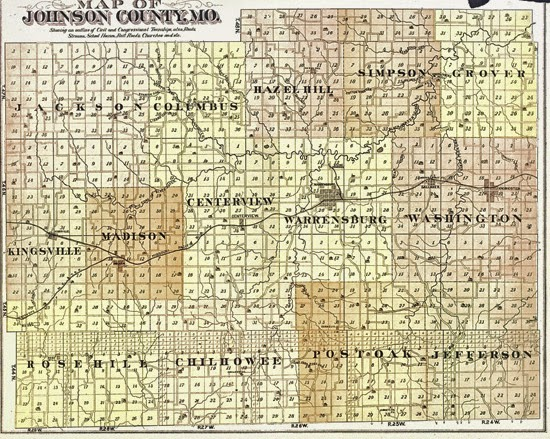
Hazel Hill Township, located in the northern part of the county, was originally a part of Washington Township. It was officially organized on June 10, 1856, and its boundaries have remained largely unchanged, except for a strip on the eastern side that was added to Simpson Township when it was formed in 1875.
Origins of the Name “Hazel Hill”:
The early school at Fayetteville was situated near a hill covered with hazel brush. In 1884, a Sons of Temperance lodge was established at the schoolhouse and named “Hazel Hill” after this hill. This name was subsequently adopted by the schoolhouse and the village, and today, the village is more commonly referred to as Hazel Hill than Fayetteville.
Early Settlements:
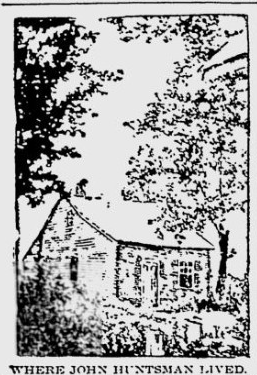
The area now known as Hazel Hill Township was among the first to be settled in what is now Johnson County, largely because of its location in the northern part of the county, where early settlers arrived from the Missouri River. Richard and John Huntsman were the first settlers, arriving in 1829. They were soon followed by others, including Samuel Cornett and William McMahan in 1831, Elijah Young in 1836, and many more throughout the 1830s. These pioneers were instrumental in developing the area, clearing land, and building homes.
Religious Establishments:
Religious organizations formed early in Hazel Hill Township. The Liberty Baptist Church, established in May 1836 with ten members, was the first church in the township. A log church was built on Section 24, along the Warrensburg and Lexington road, near Liberty Cemetery. The church served the community for about forty years before the congregation moved to Fayetteville, where a new frame building was constructed in 1877. Other early churches include the Christian Church of Fayetteville, organized in 1842, and the Mt. Moriah Cumberland Presbyterian Church, established shortly after the Civil War.
Cemeteries:
Several cemeteries were established early in Hazel Hill Township. Liberty Cemetery, located on Section 24 along the road between Warrensburg and Fayetteville, was one of the earliest. Harrison Cemetery, established in 1844, was the final resting place for Thomas B. Harrison. Other early cemeteries include Hobson Cemetery, Mt. Moriah Cemetery, and Old Bethel Cemetery.
Education:
Prior to 1838, schools were held in private residences. Around that time, log schoolhouses were built in the northern and southern parts of the township, later known as the Benton and Pettis schools, respectively. These schools were crude structures typical of the period, and they served the community until the establishment of the state educational system. The old McMahan log schoolhouse, built in 1853, was one of the later school buildings before the Civil War. The log schoolhouse that became known as Hazel Hill stood near the present site of Fayetteville.
Early Educators:
The township’s early teachers were instrumental in the education of the community’s children. Among them were Judge Robert Graham, James Borthick, Judge William L. Hornbuckle, and Henry Tarpley. Later educators included A. J. Trapp, Samuel H. McElvaine, and many others who continued the tradition of teaching in the area.
Postal Services:
The first post office in Hazel Hill Township was established at the residence of James Borthick, the first postmaster, long before the town of Fayetteville was established. The post office was originally named “Air” and was later renamed “Fayetteville” when the village developed. Ben E. Lemmon was the first postmaster in the town, holding the office until the Civil War.
https://maps.app.goo.gl/DZHyKnGCPhjrtNT48
Fayetteville Village:
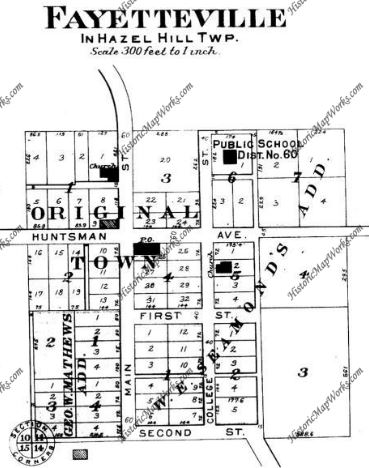
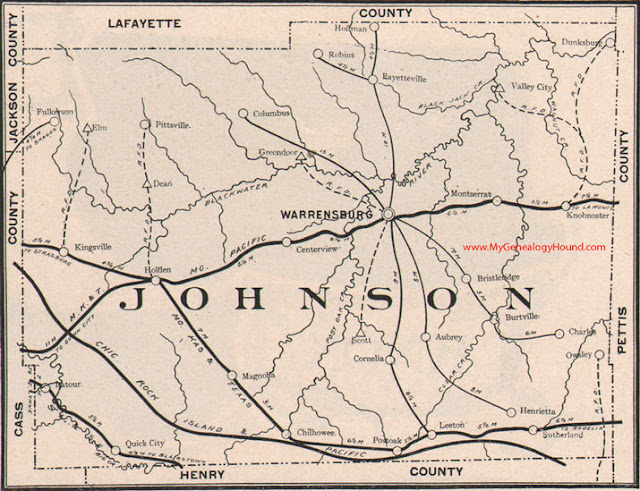
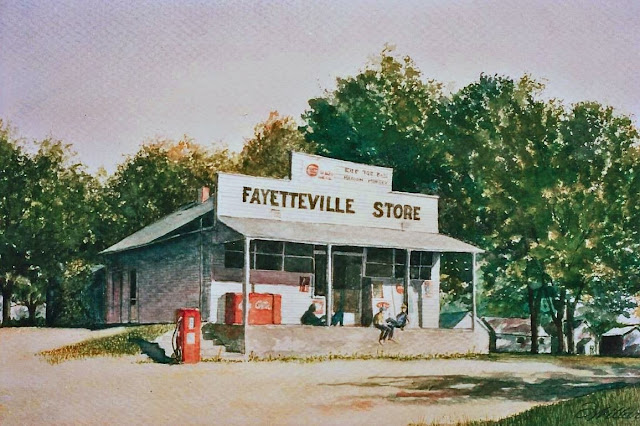
Fayetteville, the main village in Hazel Hill Township, is located about a mile east of the township’s center. The village was named after Lafayette Collins, an early merchant who operated a store there. The land on which Fayetteville stands was purchased from the government by John Huntsman on September 17, 1845. The village grew with the establishment of various businesses and has remained a key community within the township.
Justice of the Peace Records:
The records of Justices of the Peace in Hazel Hill Township date back to 1856, with names such as James P. Martin, William H. Narron, and William L. Hornbuckle serving in this capacity. The township has had numerous Justices of the Peace over the years, each playing a role in maintaining order and justice within the community.
County Officers:
Several county officers have been elected from Hazel Hill Township since 1882, including E. D. Frost, recorder, C. A. Harris, probate judge, and R. L. Falconer, sheriff. The township has also made significant contributions to county road improvements since the system was established in 1911, ranking sixth among the county’s townships in terms of work completed.
Community Organizations:
Hazel Hill Township is home to a variety of organizations, including churches, fraternal organizations, and community clubs. The township’s organizations reflect the diverse interests and activities of its residents, contributing to the strong sense of community that characterizes the area.
Information from “The History of Johnson County 1881” and “The History of Johnson County, Missouri 1918” By Ewing Cockrell
Transcribed by Joyce Simmons Dorrell 2024 copyright Exclusively for The Johnson County Historical Society. All Rights Reserved.
The United States Census of 1860, the eighth census conducted in the nation, began on June 1, 1860, and continued for five months. It recorded a population of 31,443,321, marking a 35.4% increase from the 23,191,875 people enumerated in the 1850 Census. This total included 3,953,761 slaves, who comprised 12.6% of the population.
As the 1860 census data was being prepared for tabulation, the country was on the brink of the American Civil War. Consequently, Census Superintendent Joseph C. G. Kennedy and his team produced only a limited set of public reports, omitting graphic and cartographic representations. However, the census statistics were still utilized to create maps for Union field commanders. These maps highlighted critical military information, such as the distribution of white and slave populations, predominant agricultural products by county, and key transportation routes, including railroads and postal roads.
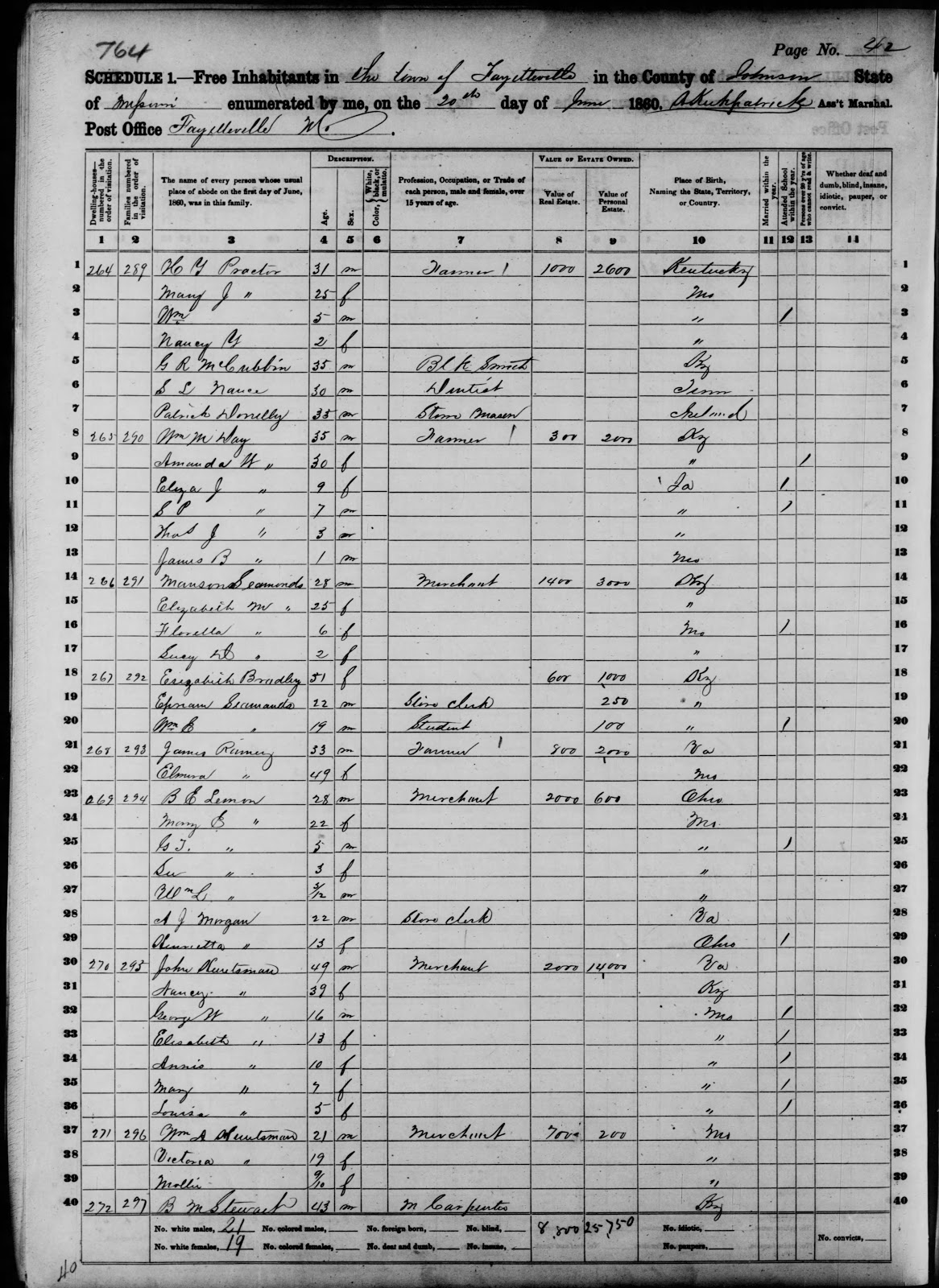
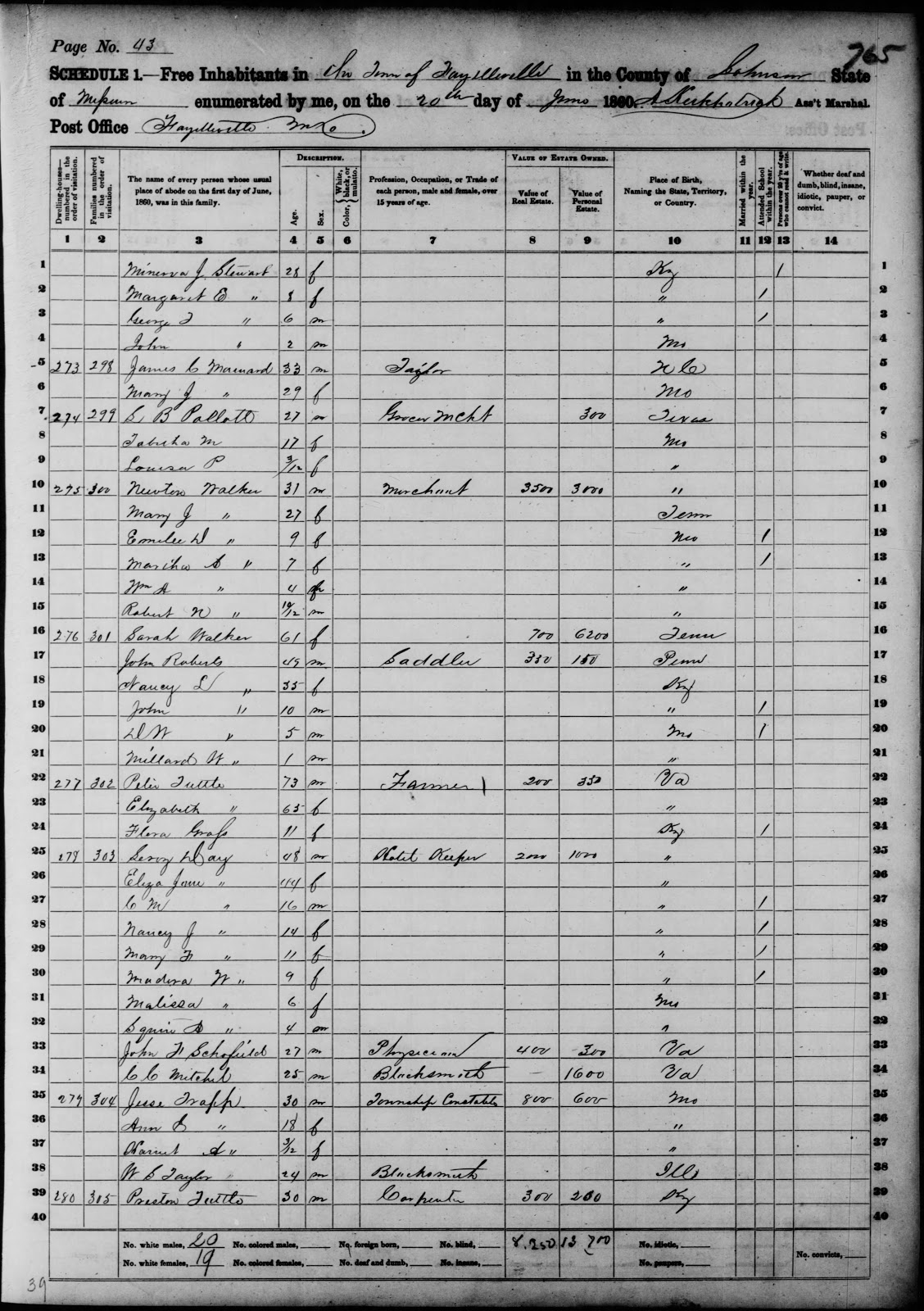
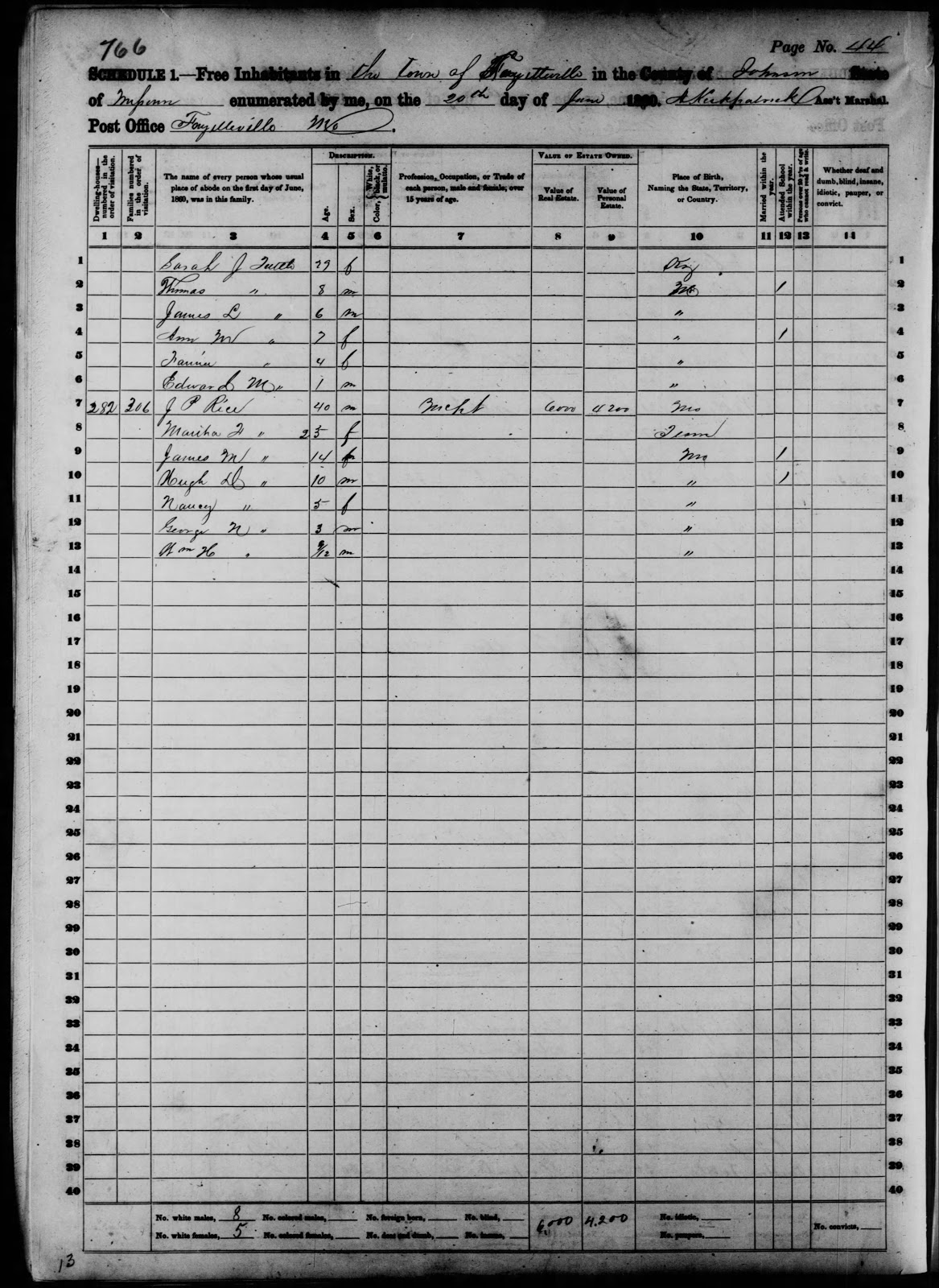
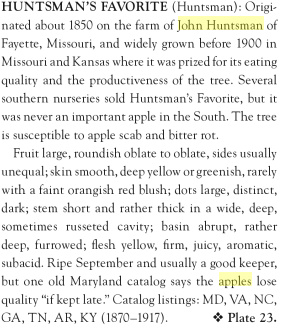
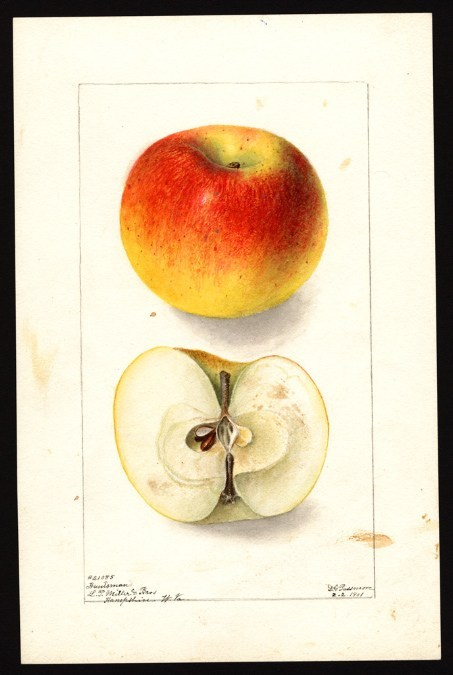
The Huntsman Apple by Joyce Simmons Dorrell
copyright 2024 All Rights Reserved
In the quiet countryside of Fayetteville, Missouri, an apple tree flourished on the farm of John Huntsman, bearing a fruit that would soon become legendary. This tree, known as the Huntsman’s Favorite, was not just any apple tree—it was a remarkable specimen, producing large, yellow apples with a distinctive red cheek and a flavor that was nothing short of exceptional. Its fruit was harvested from December to April, and for over twenty-two years, the tree never failed to yield a bountiful crop.
The story of the Huntsman’s Favorite apple began in the early 1830s when John Huntsman, along with his neighbors George McMahan and Joseph Hobson, decided to plant apple orchards on their newly acquired land. They journeyed to John Ingram’s nursery, located about ten miles north of Lexington, and each purchased one hundred seedling apple trees to plant on their farms.
Among the trees that Huntsman planted, one stood out from the rest. Positioned at the north end of the orchard near the barn, this tree would later be recognized as the origin of the Huntsman’s Favorite apple. The orchard thrived, and as the years passed, this particular tree became known for producing apples of extraordinary quality.
In 1889, Judge Harvey Harrison shared an intriguing account of the tree’s origins with W. E. Crissey. According to Harrison, Ingram’s nursery had been situated in a pawpaw thicket, and he believed that the Huntsman’s Favorite apple tree might have grown from the root of a pawpaw tree. This, he theorized, was what gave the apple its unique and delightful flavor.
The Huntsman’s Favorite apple became a beloved staple in the region, and its legacy endures as a testament to the rich agricultural history of the area. Even today, this variety remains a standard in orchards, celebrated for its exceptional taste and consistent yield.
Source. Johnson County Missouri Archive and Missouri State Historical Society
Written exclusively for The Johnson County Historical Society All Rights Reserved
 Johnson County (MO) Historical Society
You must be logged in to post a comment.