The Knobs of Knob Noster – How the City was Named
The Knobs of Knob Noster
In the vicinity of Knob Noster the land is made up of sandstone ridges on the southwest, and on the east it constitutes a beautiful rolling prairie of fertile farms. The Knobs are two prominent knolls, from which the town derives its name. They are both far above the surrounding country, and present a beautiful appearance in the midst of an almost level plain, from which these grotesque mounds stand out in striking contrast. We clip the following from the Gem, a weekly paper of Knob Noster, under date of November 28, 1879: Just northeast of Knob Noster are two hills known as the Knobs. On one of them is the residence of Mr. I. V. Dudley. On the other is nothing except a rank growth of grass and weeds. For some time there has been talk of the probable contents of this knob, but almost everybody laughed at the idea of it containing anything more than the surrounding land. However, there were a few who still thought there was a bonanza in the hill if it could only be got out. Last Saturday W. L. Shockley and R. H. Carr shouldered a pick and struck out for the knob. After a few hours’ digging they were rewarded by finding the skeletons of several human beings, together with other curiosities, which were buried with the Indians, or mound-builders, or whoever they were. The early settlers, for many years, regarded these knobs as prominent landmarks. Indian tradition states that once a great battle was fought here, and that valuable treasures lie buried about these mounds. The true account will never be known, of that conflict, even if the shining gold, so long hid away, is unearthed. The bones exhumed from their last burial tell the story that they were human beings. To say anything further on this topic would be mere supposition.from pp 489, 1881 History of Johnson County, MO
The Citizen., July 22, 1910
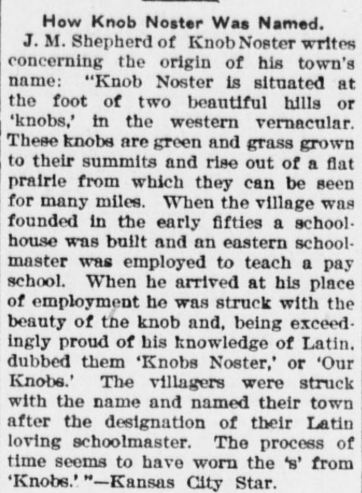
How Knob Noster (Missouri) Was Named
J.M. Shepard of Knob Noster writes concerning the origin of his town’s name: “Knob Noster is situated at the foot of two beautiful hills or ‘knobs’, in western vernacular. These knobs are green and grass grown to their summits and rise out of a flat prairie from which they can be seen for many miles. When the village was founded in the early fifties a schoolhouse was built and an eastern schoolmaster was employed to teach a pay school. When he arrived at his place of employment he was struck with the beauty of the knob and, being exceeding proud of Latin dubbed them ‘Knobs Noster,’ or ‘Our Knobs.’ The villagers were struck with the name and named their town after the designation of their Latin loving schoolmaster. The process of time seems to have worn the ‘s’ from ‘Knobs,’” –Kansas City Star
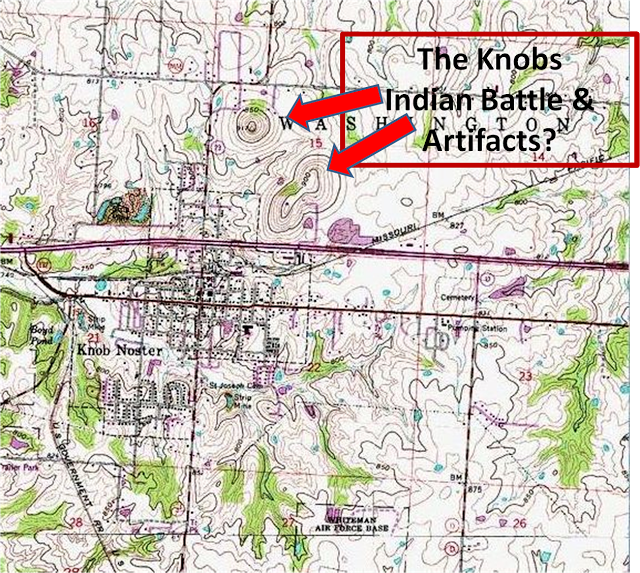
Knobs Summit –
Missouri Mountain Peak Information
Knobs is a mountain summit in Johnson County in the state of Missouri (MO). Knobs climbs to 912 feet (277.98 meters) above sea level. Knobs is located at latitude – longitude coordinates (also called lat – long coordinates or GPS coordinates) of N 38.77668 and W -93.552157.Anyone attempting to climb Knobs and reach the summit should look for detailed information on the Knobs area in the topographic map (topo map) and the Knob Noster USGS quad. To hike and explore the Missouri outdoors near Knobs, check the list of nearby trails.
Peak Type: Summit
Latitude: 38.77668
Longitude: -93.552157
Peak Elevation: 912 feet (277.98 m)
Place name: Knobs Description: Two prominent knolls in Washington Township near Knob noster. Now thought to be Indian mounds.
(HIST. JOHNSON 1881, 489) Source: Johnson, Bernice E. “Place Names In Six Of The West Central Counties Of Missouri.” M.A. thesis. University of Missouri-Columbia, 1933.
10 Most Haunted Places in Missouri
Downtown Knob Noster
By Mary Barile
Paranormal Historian
Missouri’s haunting’s reach back centuries to the Native Americans of the region, who had traditions for keeping the dead from returning to this world. Today there are dozens of haunted spots in the Show-Me State. Many of the sites are open to the public (such as the Lemp Mansion) or can be visited during special events.
1. Knob Noster
Right next to Whiteman Air Force Base is the town of Knob Noster (a “knob” being an old name for a hill or small mountain). At one time, as noted in The Haunted Heartland, a hermit lived up on the hill and as hermits do, kept to himself and avoided people as much as possible. The man had a slave who was well-liked by the locals, but one summer people realized they hadn’t seen the servant in some time. The next time the hermit came to town he was asked about his slave but all he did was glare and walk away. Rumors of a murder began to circulate through the town.
One night there was a terrible lightning storm and someone reported that he had seen a lantern moving slowly along a ridge on Knob Noster, when a bolt struck the hill. The next day several men went up to check on the hermit and found him dead with a look of terror on his face. Not long after that people reported seeing the lantern moving along the ridge during storms, and the ghost light is still spotted 140 years later. Knob Noster is just off Route 50 in Missouri, right next to Knob Noster State Park, where the light still bobs on stormy nights.
The Advocate Description:
Arrested for Arson
Date: May 30 1884
Newspaper published in: Huntsville, AL
WARRENSBURG, MO., May 24.
G. P. Harrison was arrested yesterday for burning his saloon at Knob Noster last April in order that he might get the insurance, $2,600. The company, the Springfield Fire and Marine, in which Harrison was insured, paid the loss, and put a detective to work up the case. Harrison unbosomed himself to the detective, thinking him a friend, and acknowledged having burned his hotel at Blackburn once before for the insurance. His hotel at Knob Noster was attached yesterday by the company, and they will lose nothing by Harrison’s attempt to defraud them.
The St. Louis Republic – Warrensburg, Mo., Nov. 13, 1903
Killing of Marshal Brendel Knob Noster
The special Grand Jury that has been in session hero for two weeks, today returned twenty-five Indictments. One of them is against William Roberts and Charles Hunter, charging murder in the first degree for the killing of Marshal Brendel at Knob Noster three weeks ago.
JOHN HENRY BRENDEL Memorial Link
Rank: City Marshal
Panel: 44-E: 22Department: Knob Noster, Missouri, P.D. End of Watch: October 29, 1903
Cause: Beating
Age: 46
Years of Service: 5
Marshal Brendel was attempting to break up a crowd of suspects that were drinking in a public alley. He had responded to the scene several times that day but the crowd reassembled each time he left. Marshal Brendel returned for the third time and ordered the crowd to leave the area. He was struck on the back of his head with a large piece of wood. Marshal Brendel was in a coma for five days before succumbing to his injuries.
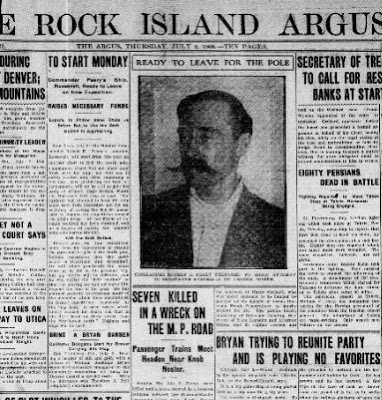
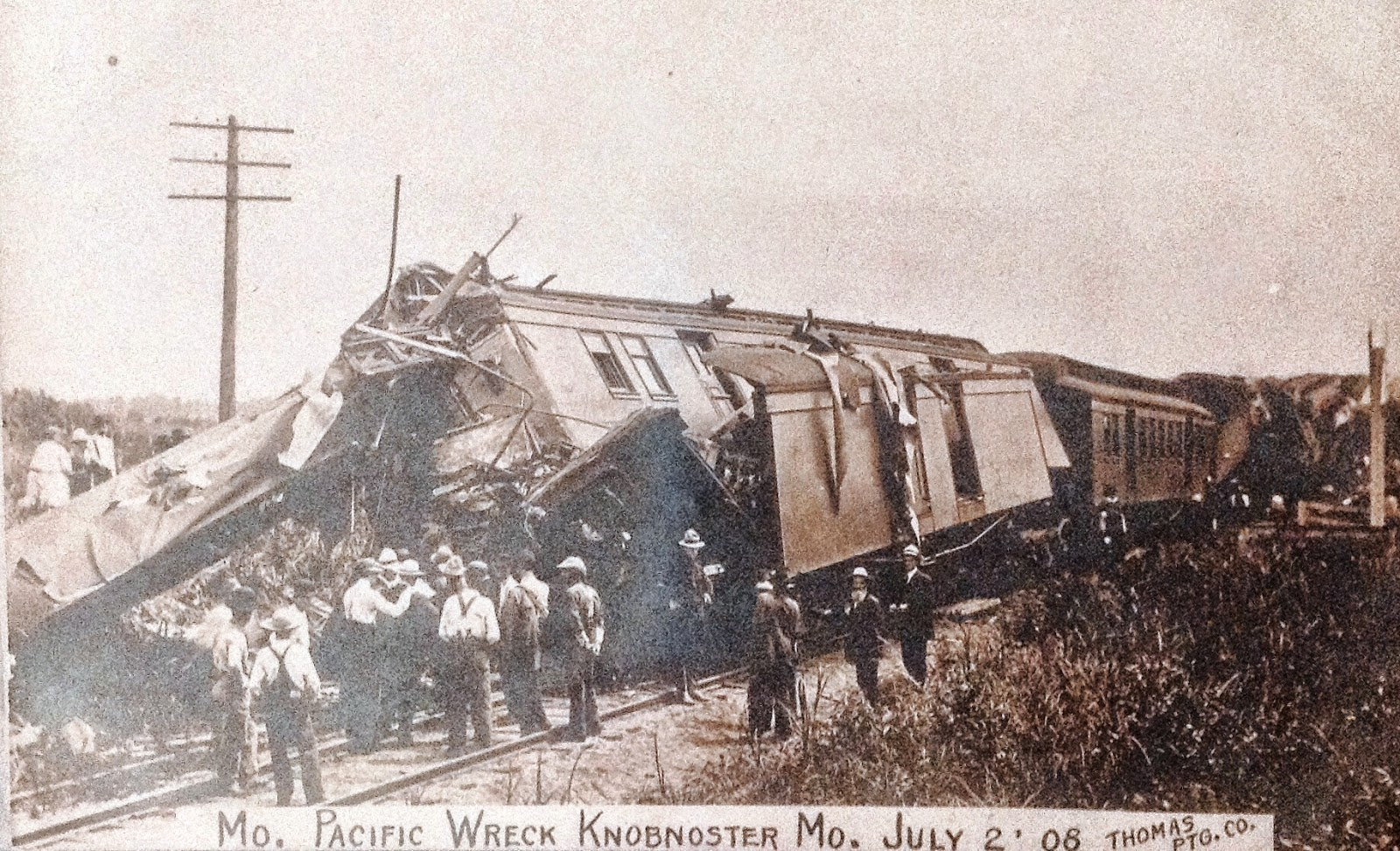
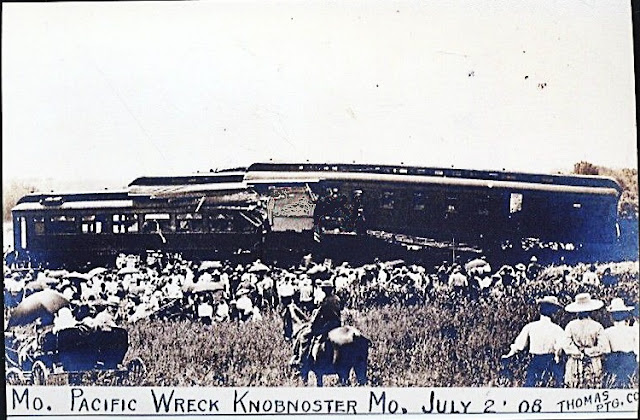
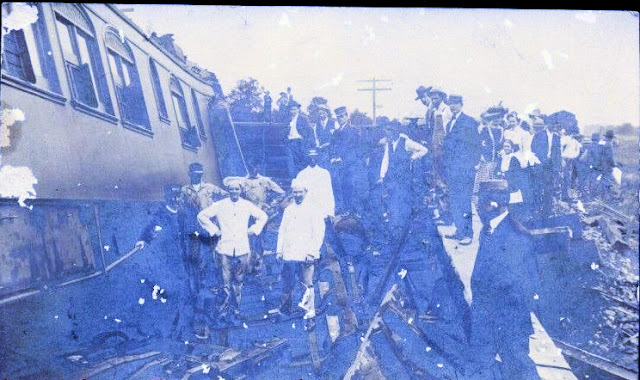
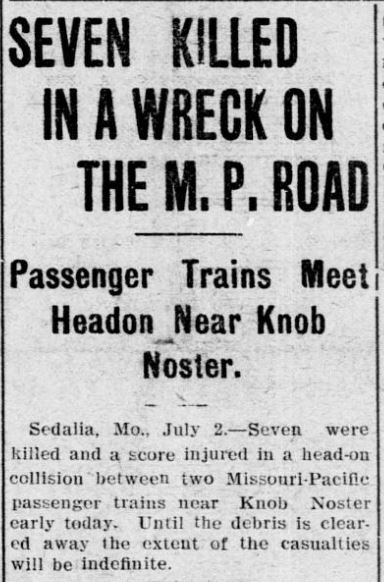
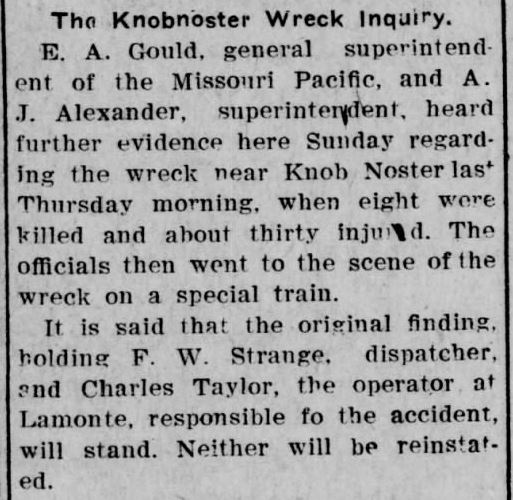
Wreck on Mo. Pac. at Knob Noster One of the Worst in History of the Road.
7 Dead 35 Injured
Two Missouri Pacific trains, met in a head on collision Thursday morning one and a half miles east of Knob Noster make it one of the most disastrous wrecks in the history of the road. The dead number seven and the injured thirty-five, of whom It Is thought several will die. One Bates County man, Carl Snead of Hume, had his left leg injured. The cause of the wreck is said to be the misunderstanding of orders by one of the train crews. The trains were No. 3 and No. 12 and were running at a high rate of speed when they met. Both trains were badly damaged. The dead were taken to Knob Noster and the injured to the Katy hospital at Sedalia.
Lightning Kills Missourian. Warrensburg, Mo. Mrs. Frances Hollenbach and three small children, who reside two and a half miles south of Knob Noster, were struck by lightning. June 23, 1904
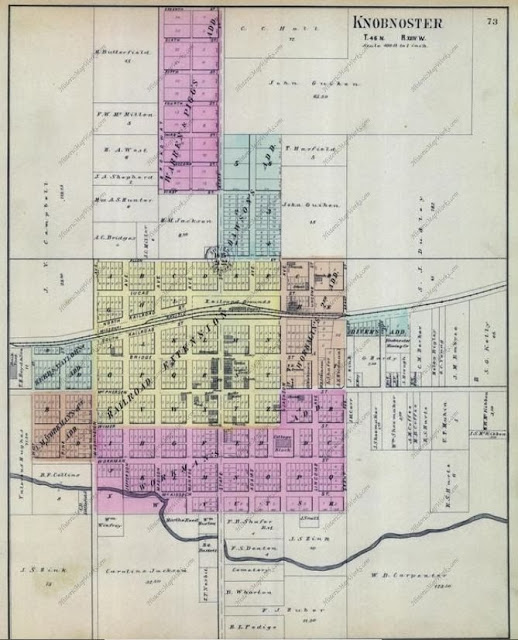
Knob Noster. Missouri 1898 Plat Map
Johnson County, Missouri Genealogy Trails
Source: “History of Johnson County, Missouri” by Ewing Cockrell, 1918
Transcribed by Karen Hammer -2009
WASHINGTON TOWNSHIP
Washington township was one of the first four townships of the county and originally comprised approximately the northeast quarter of the county. It was organized May 4, 1835. It was named for George Washington. The first wagon road laid out in the township was from Knob Noster to Kirkpatrick’s mill in 1852.
Knob Noster.-One of the unusual physical features of the township is what is known as the Knobs, two prominent knolls located just north of the town of Knob Noster, from which the town derived its name. They both rise a considerable height above the surrounding country. Much conjecture and a great deal of unreliable tradition envelop the history of these mounds. The early settlers for many years regarded these knobs as prominent land marks. An Indian tradition is that a great battle was fought here at one time. Human bones have been exhumed from these mounds but the mystery of how they came there is still unsolved. There is also an Indian tradition that these mounds are the hiding place of valuable treasure which was buried here sometime in the past. Concerning the curiosity with which these mounds were viewed as late as 1879, the following article appeared in the “Knob Noster Gem,” under date of November 28, 1879: “Just north of Knob Noster are two hills known as the Knobs. For some time there has been talk of the possible contents of these Knobs but almost everybody laughed at the idea of them containing anything more than the surrounding land. However, there were a few who still thought there was a bonanza in the hill if it could only be gotten out. Last Saturday, W. L. Shockley and R. H. Carr shouldered a pick and struck out for the Knobs. After a few hours’ digging they found the skeletons of several human beings, together with other curiosities, which were buried with the Indians, Mound Builders or whoever they were.”
Early Settlements-The first settler of the original Washington township of whom we have any record is said to have been John Leeper, who settled in what is now Grover township. Col. John Robinson states in the Johnson County History of 1881: “In about 1828, John Leeper. son-in-law of Peter Fisher, of Pettis county, settled in the woods in section 22, township 47 and range 25, and improved five or six acres. Just northeast of him in section 16 William Cheek settled about the same time and in 1831 built the old Gallaher mill in section 6, on Clear Fork.” The first land entry by Cheek was November 30. 1832, in Montserrat township.
Joseph Lapsley came from Russell county, Kentucky, in 1837 and died in 1854. John Coy settled here in 1833 and died in 1850. He was also a Kentuckian. Spencer Adams, a native of North Carolina, is said to have settled in this township in 1835. (He made land entry in 1832.) He died in 1867. Ambrose Brockman, from Russell county, Kentucky, settled here in 1837 and died in 1848. James A. Gallaher was also a very early settler. Vally Hall, a Kentuckian, came here in 1835 and died in 1868. John Stewart, also a Kentuckian, came in 1834 and died in 1843. Samuel Graham from Kentucky, made his home here in 1834 and died six years later. Thomas M. Ramsey settled on section 14 in 1859. Jonathan Butler, Alexander and William Gregg. James Ray and George Gallaher were also pioneers who settled here in the thirties. A German named Strickland settled on section 12 in 1836 but a few years later, when the settlers began to locate within two or three miles of each other, he began to feel crowded and went farther south. Among others who settled here prior to 1840, were W. A. Williams, Jacob Knaus, Samuel Workman, W. H. DeArman, James Brown, Richard McCombs, Henry Hayes, Fred Houck, John Reed, Andrew Thompson, George Thornton, Samuel McCormack, Benjamin Howard, William Box, W. R. McCart.
At a general election held in Knob Noster on the first Monday in August, 1858, appear the names of A. Hargraves, Samuel McKeen and Jacob Knaus as judges, and J. C. Corum as clerk. All were sworn in August 2, 1858, by J. B. Mayes, justice of the peace.
(At this election two hundred and fifty votes were cast.)
Among the first to enter government land in this township were Richard Marshall, October 4, 1833; James Ray, March 1. 1834, and Henry Edwards, June 13, 1834.
Early Churches-The earliest church in what is now Washington township was Pleasant Grove church, a union building owned by the Cumberland Presbyterians and Southern Methodists in the south part of the township.
It was organized in 1853-54 by Rev. John B. Morrow. The building was erected since the Civil War and dedicated by Revs. J. H. Hint and Mr. Young.
Early pastors of this church were W. Gilliam, W. Compton, B. W. Pierce, E. Morgan, J. B. Morrow, J. Whitsett. B. F. Thomas, J. T. A. Henderson and L. H. Davis.
Old members were William Geery and wife, Daniel Adams, Susan Adams, Isaiah Kimzey and wife and C. P. Phillips.
The next churches organized were in Knob Noster town, and are included in the history of that town.
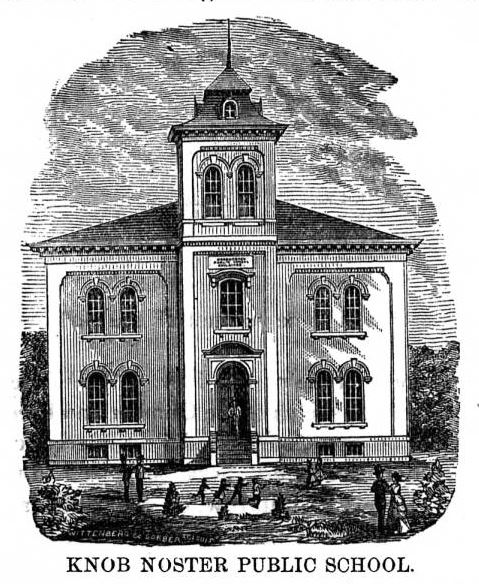
Early Schools-The first log school house erected in the township was a crude structure. 10 by 16 feet, located in the northeastern quarter of section 10. One log was cut out to admit light. The clapboard roof was held on by weight poles, the door swung on wooden hinges and was fastened by a latch made of wood. In 1837, another log school house was built along the same general line of architecture on the southeast quarter of section 11. Here Jesse Trapp and James Ford taught school for a time. In 1838 a log school house was built on section 23. This building was along the same general lines as the others with one log left out for a window. The seats were made of puncheons and the heating system consisted of a fire-place. James Cochran was the first teacher here. The next school house was erected in the old town of Knob Noster. This was built in 1856 and was of the frame type of building. In 1866, it was moved two miles northeast of the old town on the south half of section 12 in Oak Grove District No. 10.
Among the early teachers at Oak Grove school were D. D. Duncan, Miss Sophia Welsh, J. R. Rainwater, J. M. Bigley. Mrs. Anna Dunn, Reuben Reaves, W. R. DeLaney, Reuben Wade, Thomas Prather, William O’Bannon, W. H. Hatton, H. C. Sparrowhawk, J. P. Walker, H. T. Williams, J. E. Gatewood, J. H. Allen, and Everett Miller. Prairie Home school, in District No. S, succeeded an old school called Quail Trapp, built in 1866. The following were early teachers in this district: Miss M. Brown, B. C. Stephens, Thomas H. Jones, Miss Nellie Zimmerman, Charles B. Littlefield. Miss Laura Lutz, Miss Alice Wharton, Frank P. Langston, Davidson Grover, Peter Lynch, Miss Sallie Zoll, Miss Bettie Duffield, Miss Myra Houts and Miss Mollie Guihen, John McKeehan, Mrs. D. A. McCormick, J. P. Wallace, A. J. Sparks and John Byrne.
Justices.-The following are the justices of the peace of the township as far back as the county court records show, with dates of their election: 1842, Richard C. Wariner, Samuel Workman, William H. Collins; 1844, Jacob Knaus. Jacob Raper, Henry S. Pease; 1846, William Kirkpatrick; 1850, Hiram C. Key, Robert M. Maxwell, Squire Williams; 1852, Zachariah Clark, John Bobbitt; 1856, William P. Mayes, John Bobbitt; 1860, N. Fisher, John Bobbitt; 1862, Samuel Workman; 1870, A. E. Weidman, William Fisher; 1878, W. H. Anderson, B. R. Tompkins; 1882, J. W. Denison, H. J. Adams; 1886, P. D. Fitch, John S. Mayes; 1888, W. H. Anderson; 1890, L. B. Thomas, J. W. Mitchell, Taylor Kirkpatrick; 1896, John M. Kelly; 1898, A. M. Craig, A. W. Wheatley; 1900, J. M. Mitchell; 1902,.A. M. Craig, B. F. Summers; 1906, George L. Taylor, B. F. Summers; 1908, S. P. Caldwell, F. S. Denton; 1910, J. C. Metts, John T. Lay; 1914, Jacob H. Knaus, J. C. Metz.
County Officers.-The following are the county officers who have been elected from the township since 1882, with the dates of their election:
1892-George N. Hocker (Democrat), representative.
1894-96-George T. Gallaher (Democrat), surveyor.
1894-96-L. B. Thomas (Democrat), assessor.
1900-1904-T. J. Summers (Democrat), assessor.
1902-C. D. Thompson (Democrat), superintendent of schools.
1904-08-12-A. M. Craig (Democrat), public administrator.
1908-B. F. Summers (Democrat), county judge.
1912-14-Ed. S. Harte (Democrat), county judge.
County Road Improvements.-County road improvements made by Washington township since this system was established in 1911, were up to January 1, 1918, nineteen in number, and aggregated $1,224 furnished by the citizens of the township, and $1,025 by the county. In this particular Washington township ranks seventh among the townships of the county.
Organizations.-The following is a complete list of all organizations of every kind in Washington township. Full details of each organization are in separate chapters on the different organizations.
Churches-Baptist, Knob Noster; Catholic, Knob Noster; Christian, Knob Noster; Cumberland Presbyterian, Pleasant Grove; Cumberland Presbyterian, New Church: Latter Day Saints, Knob Noster; Methodist, Knob Noster; Methodist, South, Knob Noster; Presbyterian, Knob Noster.
1917 War Organizations-Red Cross, Knob Noster Branch.
Fraternal Organizations-Masons, Odd Fellows, Knights of Pythias, Modern Woodmen, Mystic Workers, Royal Neighbors.
Miscellaneous Organisations-Swastikas.
Business Organisations-Bank of Knob Noster, Peoples State Bank.
Total number of organizations in township is nineteen.
KNOB NOSTER
Biographical Sketch of E. C. Littlefield, Johnson County, Missouri, Knob Noster
From “History of Johnson County, Missouri,” by Ewing Cockrell, Historical Publishing Company, Topeka, Cleveland, 1918.
******************************************
E. C. Littlefield, the prominent attorney of Knob Noster, Missouri, was born in 1868 in Knob Noster, the son of Lyman C. and Ellen Z. Littlefield. Lyman C. Littlefield was the son of William Littlefield, a native of Weld, Maine. The Littlefield family is of English descent. Two brothers emigrated from England to America in the earliest colonial days and from them the Littlefields in America have descended. Lyman C. Littlefield was a teacher in Knob Noster before the Civil War and one of the town’s first merchants. He also was the owner and manager of the first lumber yard in the old town of Knob Noster. During the Civil War, he was at one time a prisoner of war. Escaping from the Southern army, he returned to his old home in Maine and for many years was engaged in the manufacture of shingles in that state. Later in life, Lyman C. Littlefield returned to Johnson county, Missouri, where he became an extensive landowner, engaging in stock raising on a large scale. He was president of the Bank of Knob Noster for several years and it was he who placed this bank on its present firm, financial basis and secured for it the sound rating and prosperity it now enjoys. Mr. Littlefield died January 5, 1901. His wife had preceded him in death many years before, her death occurring in 1879. Seven children were born to Lyman C. and Ellen Z. Littlefield, six of whom are now living: Charles B., Claremore, Oklahoma; William W., Kendrick, Oklahoma; Mrs. Lillian May Shumaker, Colorado Springs, Colorado; E. C., the subject of this review; Mrs. Nora E. Thompson, Erie, Kansas; and Lyman M., Lamonte, Missouri. The early education of E. C. Littlefield was obtained in the public schools of Knob Noster, Missouri. He later attended the Wentworth Military Academy at Lexington, Missouri and completed his education at the Missouri State University, where he was a student in the law school, graduating in the class of 1890. After completing college, Mr. Littlefield was for six years a member of the law firm, Waddill & Brown, having an office in the New York Life building in Kansas City, Missouri. In 1896, E. C. Littlefield came to Knob Noster and opened his law office and he has ever since been engaged in the practice of law in this city. He has been city attorney for the past 20 years, which is sufficient evidence of the high esteem in which he is held. Mr. Littlefield states that he is no politician but has made it an invariable rule to “vote for the man.” In 1912, E. C. Littlefield was united in marriage with Mrs. Georgia (Hope) Lewis, the daughter of Colonel John C. Hope, the well-known and influential politician of
Missouri. Mr. and Mrs. Littlefield are numbered among Johnson county’s best families.
==========================
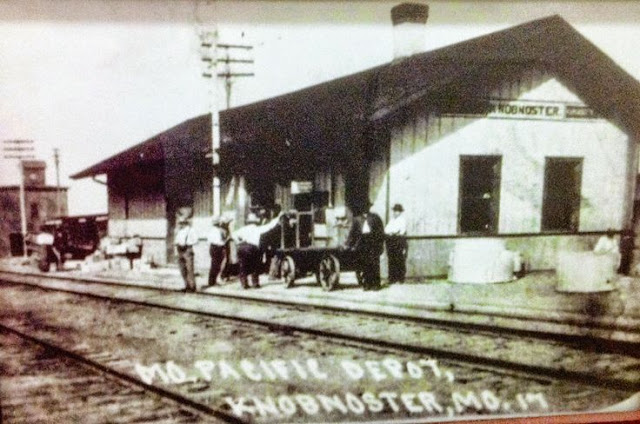
Knob Noster, one of the progressive towns of the county, is on the main line of the Missouri Pacific railroad about three miles from the Pettis county line.
The town is situated in sections 15. 16, 21 and 22. The old town of Knob Noster was located about a mile north of where the depot now stands and still contains a number of houses on its one broad street.
The present town came into existence when the Pacific railroad was built. William Wortham was perhaps the pioneer merchant in the old town of Knob Noster.
The first post office was established here in 1850 before any town or village was laid out. It was located at the residence of Andrew Thompson, who became the first postmaster. Other early postmasters here were James Morrow, John Satoris, Charles Vantillman, Robert Dawson, William Mayes, John A. Pigg, William Chester, Miss Jennie Chester and C. Cobb.
The “Knob Noster Gem” is one of the old newspapers in the county. Its first issue was printed May 31, 1878, with Harris & McFarland as editors and proprietors. It is now unusually well edited by E. T. Hodges.
Other newspapers published at Knob Noster from time to time were the “Farmer,” 1872, the “Register,” “Local,” “Herald” and “Review.”
The following are the churches of the town with dates of organization: Cumberland Presbyterian; Baptist, 1856; Catholic, soon after Civil War; Latter Day Saints, 1889; Methodist. 1865; Christian, 1866; Presbyterian, 1867; Baptist Negro; Methodist Negro.
The town has electric light service, two banks, high school, good oiled streets, a large well established brick plant and all lines of ordinary business.
The population, 1910, was 670.
The following is a list of city officers:
Chairmen.-1877, H. C. Coffman; 1878, P. O. Sullivan; 1879-80. B. R. Tompkins; 1881, J. H. Knaus.
Mayors.-1901-04, B. F. Summers; 1905-06, C. V. Huff, Jr.; 1907-12, A. M. Craig; 1913-14, J. H. Rothwell; 1915-18, A. M. Craig.
Aldermen.-1877, V. Hughes, C. Cobb, P. O. Sullivan, G. Hardey; 1878, V. Hughes, C. Cobb, H. C. Coffman, G. Hardey; 1879, V. Hughes, C. Cobb, P. O. Sullivan, G. Hardey; 1880, J. C. Winkler, J. Carr, G. O. Talpey, W. J. Workman; 1881, J. L. Winkler, C. B. Littlefield, A. D. Wilson, J. C. Miller; 1901, J. V. Campbell, L. P. Shafer, E. A. Shepherd, A. G. Hunter; 1902, J. M. Kendrick, J. C. Foster; 1903, C. B. Littlefield. G. C. Miller; 1904, J. N. Kendrick, G. N. Hocker; 1905. E. E. Thompson, W. W. Spiess; 1906, J. M. Kendrick, W. B. Daw, D. N. Saults; 1907, J. C. Metts, W. B. Daw; 1908, Wm. Shoemaker, D. N. Saults; 1909, J. T. Lay, J. C. Metts. J. C. Foster; 1910, J. T. Lay, J. W. Mclntosh; 1911. S. A. Spiess, Hill Hunter; 1912, S. J. Dudley, Jehu Hull; 1913, S. A. Spiess, Frank Jenks; 1914, C. W. Weidman, C. L. Saults; 1915, S. A. Spiess. Frank Jenks; 1916, C. W. Wiedman, C. L. Saults; 1917, J. M. Kendrick, Wm. Ragner; 1918, C. W. Weidman, C. L. Saults.
Clerks.-1901-06, George J. Taylor; 1907-09, Charles Y. Taylor; 1910-13, C. L. Saults; 1914-18.W. J. Carr.
Police Judges.–1901-04. J. C. Winkler; 1905-06, W. C. Knaus; 1907-08, J. M. Kinman; 1908-10, Mark Kidney; 1910-14, W. C. Knaus; 1915-18, J. C. Foster.
Marshals.-1881. T. E. Rigg; 1901-03. J. H. Brendel; 1904-06, J. W. Bailey: 1907-08, William Covey; 1909-10, George Kinman; 1910, W. C. Knaus; 1911-14, W. B. Arbogast; 1915-16, R. F. Clark; 1916, George Kinman; 1917, H. T. Hite, Hill Hunter; 1918, Hill Hunter, L. W. Scott.
Collectors.-1901-02, A. M. Craig; 1903, C. C. Hayes; 1904-06, J. W. Bailey; 1907-14. William Covey; 1915-16, R. F. Clark; 1916, George Kinman: 1917,
H. T. Hite; 1917-18. Hill Hunter.
Street Commissioners.-1901, A. M. Craig; 1903-06, B. P. Michael; 1907-15, R. F. Clark: 1916-18, George Kinman.
Treasurers.-1901-04, Ed S. Harte; 1905-08, W. T. Zuber; 1909-12, S. L. Doggett; 1913-18, A. S. Adcock.
Attorneys.-1901-08, S. G. Kelly; 1909-12, E. C. Littlefield; 1913-16. J. H. Knaus; 1917-18, E. C. Littlefield.
Johnson County, Missouri Genealogy Trails
© 2006 – 2008 by Genealogy Trails – All Rights Reserved – With full rights reserved for original submitters.
From Knob Noster.gov Site
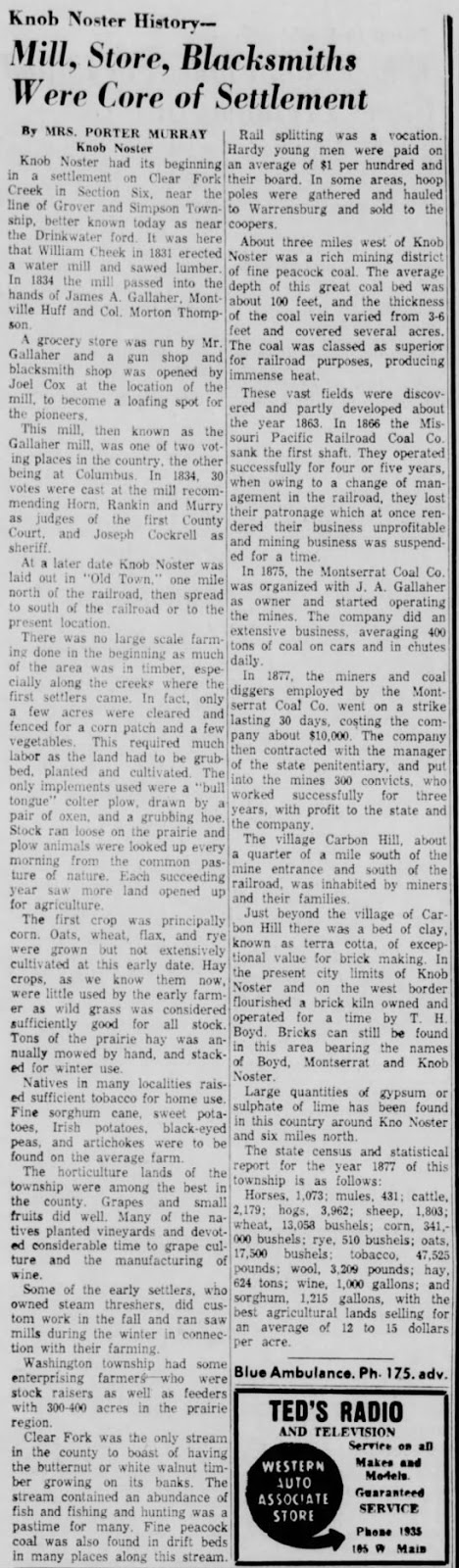
Knob Noster is located on U.S. Highway 50, approximately 60 miles east of Kansas City, Missouri. A short distance northeast of town there are two hills, called knobs. The hills have become a landmark for the community and are closely related to the organization and background of the town.
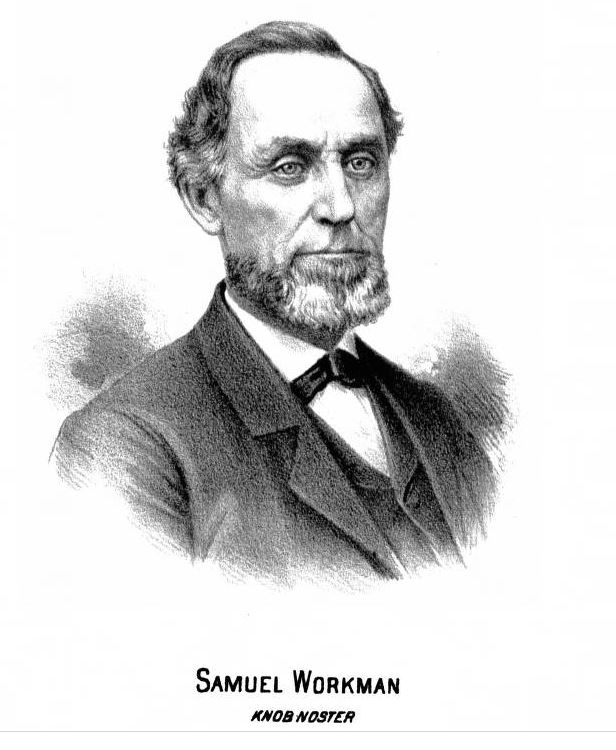
Knob Noster had its beginning in 1850 when a post office was established in the original “Old Town” settlement, located one mile north of the present town. W.A. Wortham then settled in Knob Noster in 1854. By 1860, when the Missouri Pacific Railroad made its way into the territory, the town had a population of 450, with 30 professions and businesses, a Masonic Lodge and seminary. When the current owner of the land that would bring the railroad through town would not give up the land to make that possible, Sam Workman took 40 acres of his land and laid out the town and offered the railroad some of his property. He then laid out a town one mile south of the original settlement.
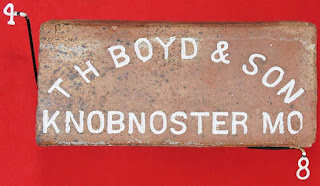
In 1867, the frame buildings that had been constructed on Main Street burned. Brick to rebuild the buildings was acquired from a company located a short distance outside of town. Although the buildings have changed a great deal from 1850, the atmosphere of hospitality and friendliness is still apparent in this community where Whiteman Air Force Base and Knob Noster State Park have become an integral part of the community life.
Originally, Knob Noster was primarily a farming community. With the advent of Whiteman Air Force Base and the tourist attraction of Knob Noster State Park, the town’s population has grown to the present estimated count of nearly 2,800.
The city of Knob Noster has established and maintained public improvements that support a full service community. Although the city remains relatively small, its location allows for a strong industrial and commercial business base, local sales tax revenue, and the development of a higher quality of life.
History
The knobs of the town’s namesake are not only a geographical landmark for the town, but are also claimed to be the site of a battle of Native American tribes. Sometimes there are stories that gold or treasure is buried in the knobs. This can be neither confirmed nor denied.
Beginnings
When first settled, Knob Noster was part of Cooper County which took in all of the territory between the Osage and Missouri Rivers. By 1820, the population was sufficient in the area so that a division of Cooper County needed to be made. The new county was called Lillard County, Missouri, and it included what are now Lafayette and Johnson Counties, as well as all the areas south to the Osage River and west to the Missouri Border. By 1834, the population was large enough, estimated at about 200 households, for Lafayette County to be divided into two counties. One retained the name Lafayette and the other was called Johnson County. On May 4, 1835, Johnson County was further divided into four townships: Jackson, Washington, Madison, and Jefferson. Knob Noster is located in what was named Washington Township.
Coal mining
In the 1870s Knob Noster was described as “the boomingest settlement in the county,” in large part because of the vast coal deposits in the area. The eastern part of Johnson County held vast amounts of coal, some veins reaching thicknesses of four to five feet which greatly added to the prosperity of Knob Noster. Unfortunately that prosperity only lasted for a decade or so before the coal supplies were exhausted.
High school
The Knob Noster High School (KNHS) was organized in 1888, and at the same time, the requirements to complete a public school education were changed from five years to eight years, including three years of high school. The first class to enter the high school was very large according to contemporary accounts, which gave no figure of enrollment, but after three years, only two remained and received diplomas. Teachers in rural schools in the area at this time were paid between $25.00 and $35.00 per month. They boarded out and paid $8 to $10 for board and laundry.
Great fire
There was a great fire in Knob Noster in the mid 1880s that destroyed much of Knob Noster. Some of it was saved and the town was eventually rebuilt.
History
Knob Noster State Park is named for the nearby town which itself is named for one of two small hills or “knobs” that rise up in an otherwise flat section of Missouri. A local Indian belief stated that the hills were “raised up as monuments to slain warriors.”Noster is a Latin adjective meaning our. Therefore Knob Noster translates as our hill.
The park was constructed during the Great Depression by the Civilian Conservation Corps and the Works Progress Administration. The CCC and WPA were both part of President Franklin D. Roosevelt’s New Deal a series of government funded programs designed to provide work for the unemployed workers of the Great Depression.[4] The men of the CCC and WPA built roads, bridges, camping areas, picnic areas, and park service buildings. The park, originally known as Montserrat National Recreation Demonstration Area, was transferred to the state of Missouri in 1946 and named for Knob Noster.
Battle of Blackwater: Early the next morning Pope’s force marched toward Knob Noster, Missouri. Pope ordered Colonel Jefferson C. Davis’s brigade to the Blackwater bridge where he was to force the bridge. Simultaneously a battalion of the 2nd Missouri Cavalry (“Merrill’s Horse”) moved northeast to complete the envelopment.
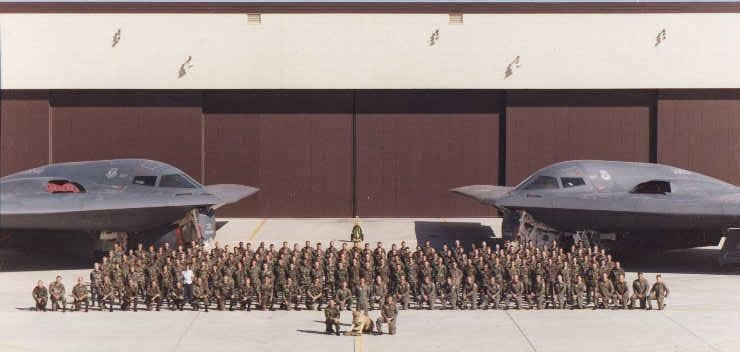
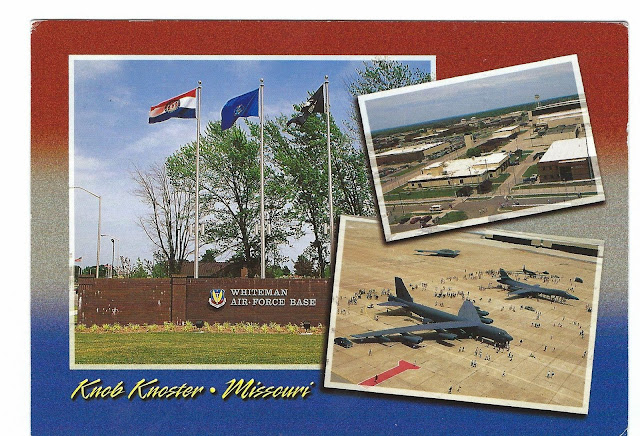
But the only lucky strike here so far has been the one that brought Knob Noster an air base. The Whiteman Air Force Base, only a mile or so from the city limits, accounts for more than two-thirds of its economic activity. Now, if the city leaders’ hopes pan out, the base will set off a new rush of development. It is the only base to be named so far for the first of the nation’s projected fleet of 132 Stealth bombers. The move is expected to bring in 8,100 more Air Force personnel and dependents, who, along with more than 1,000 people in new civilian jobs, are expected to more than double the population of the base and the community. Many people here say they hope all that can be achieved without changing the quiet nature of the town about 70 miles east of Kansas City that has made it a favored retirement home both for townspeople and for airmen. In a place where the only restaurant is a coffee shop that closes at 2:30 every afternoon, hopes for development center on things like an all-day, fast-food restaurant. Gregory Bynum, executive vice president of the Bank of Knob Noster, says development might also bring a doctor, perhaps a pharmacy and maybe even a department store or a jeweler. And to get ready for it all, the town is already moving ahead with planning and preparations. It is putting $100,000 a year into public improvements, including doubling the capacity of a water system that nearly failed in last summer’s drought. ”I really think we’ve got a great opportunity for growth here,” said Betty Hall, publisher of The Knob Noster Item, a 30-year-old weekly newspaper, voicing a sentiment that was widely shared as she sipped coffee at the downtown Office Cafe. ”I think most people don’t realize what this is going to mean for Knob Noster.”
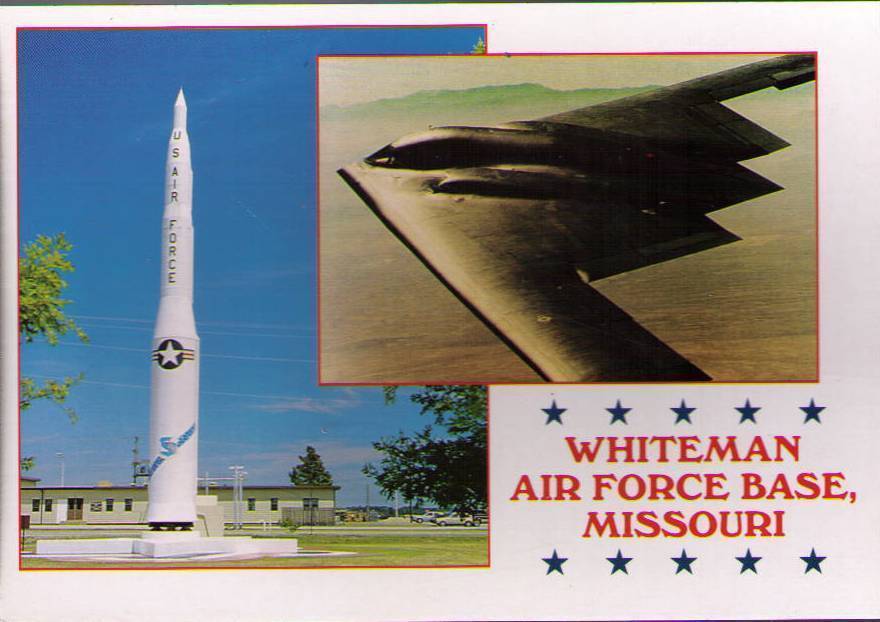
The town had dwindled from 2,000 in the 19th century to a dusty village of a few hundred people in 1942 when the Army Air Corps placed a glider training base here. The Government immediately offended local pride by naming the new post the Sedalia Army Air Base, for a much larger town about 18 miles to the east. A lot of subsequent growth went to Sedalia and to Warrensburg, about nine miles to the west. Now, 46 years later, after conversion to a bomber base and the later addition of a site for 150 Minuteman missiles, Knob Noster has a little more than 2,000 people. About 2,000 more live on the outskirts, and the base population is about 4,000. Besides the bank and cafe, the town has a grain elevator, two barbershops, two hardware stores and a few other businesses, including a new motel on U.S. Route 50 on a tract recently annexed by the city.
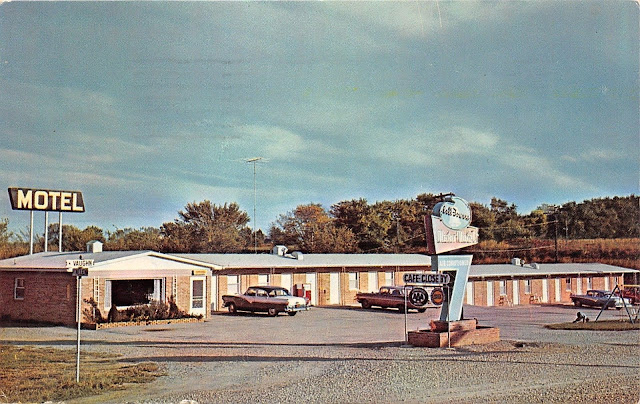
The Old Bell Towers Motel. Highway 50 in Knob Noster, Mo.
A city hall, a police station, schools and a lot of neatly kept homes complete the cityscape. It is a town where relationships seem easy, where Mrs. Hall smiled tolerantly at one of the standard jokes of Bob Carr, a businessman, alderman, former city clerk and town humorist. (The Item is a try-weekly he says, adding, ”They try weekly to put out a newspaper.”) And conversations sometimes bring the legend that gold was buried north of town by pioneers in a wagon train who were massacred there in 1819. It is buried, some say, on ”our knob,” Knob Noster. Others suspect the name is a corrupted version of some old Indian word. In the cafe, at the busiest corner, an intersection with four stop signs, the owner, Dean Gray, was recalling what kept him here after he retired as an Air Force master sergeant. ”You come here and you think, ‘What a dump they brought me to!’, he said. ”But before long you start to feel like it’s home.” There are, of course, some natural concerns, among them those of David A. Yount, a retired colonel. ”It’s going to overload the medical facilities at the base,” he said. ”I’m afraid I’m going to be standing in line.” ”I hear all sides,” said Mayor Maurice Krause, a meat-cutter at the air base. ”Some people want to see us stay quiet and small,” Mayor Krause said, ”I’m excited. My position is we’re going to grow, and we can control it and see that it happens in the best way possible.”
The optimism generally drowns out the concerns. ”Well, I just might build some more,” said A. F. Quattlebaum, another retired master sergeant, who owns 39 units of rental housing. And Mr. Gray said there was nothing forcing him to close the Office Cafe in the afternoon. ”If the money’s coming in, I’ll be here,” he said.
One of two women qualified to fly the B-2 stealth bomber talks about flying the $1.3 billion plane at Whiteman Air Force near Knob Noster, Mo.
The 31-year-old is being identified only by her radio name, Iron Butterfly, because of security concerns.
Articles about the Canida family from the Knob Noster, Johnson County, Missouri newspaper. ****************************************************************** File contributed for use in the USGenWeb Archives by: Audie Canida <audiec@swbell.net> USGENWEB NOTICE: In keeping with our policy of providing free information on the Internet, material may be freely used by non-commercial entities, as long as this message remains on all copied material, AND permission is obtained from the contributor of the file. These electronic pages may NOT be reproduced in any format for profit or presentation by other organizations. Persons or organizations desiring to use this material for non-commercial purposes, MUST obtain the written consent of the contributor, OR the legal representative of the submitter, and contact the listed USGenWeb archivist with proof of this consent. ******************************************************************* From the Knob Noster Gem, Knob Noster, Missouri, Friday, November 21, 1902: Killed Himself Henry Canady who owned and lived upon 40 acres of land seven miles north of this city, committed suicide last Saturday morning by shooting himself with a shotgun. He was 72 years of age. Saturday morning he took the gun and started hunting. About 300 yards from the house he sat upon a knoll, first getting horse-weed with which to push the gun trigger, he deliberately planted the gun at his heart and pushed the trigger with a branch of the weed. The branch broke off and he then placed the end of the weed against the trigger and the full load was discharged into his breast, killing him instantly. Coroner Bills was notified and came down on the afternoon train. He did not think it necessary to impanel a jury, but took the testimony of some of the family, which showed also that it was not the old man’s first attempt. From the Knob Noster Gem, March 1918 – Walter A. Canida died at his home north of Knob Noster March 13, 1918 of TB. He leaves 2 children and other relatives. He was buried at Hocker Cemetery. His wife died about a year ago. From the Knob Noster Gem, January 2, 1920 – Edith Canida daughter of Mr. and Mrs. Burl Canida passed away Friday night after a long illness. She was 16 years of age. Funeral services conducted by Bro. West at the home Monday at 2 o’clock. She was buried in Hocker Cemetery. From the Knob Noster Gem, January 3, 1924 – Clifford Canida of Oklahoma City left for his home Tuesday after spending 3 weeks with his uncle J. B. Canida who resides south of town. From the Knob Noster Gem, September 18, 1930 – Sunday dinner guest of Herman Canida were Mr. J.B. Canida, Rachel, Goldie, Clyde, Marie, Jesse, and Ethel Canida, Fred Shornhorst, and Harold Clark. From the Knob Noster Gem, May 9, 1935 – A marriage license was issued in Sedalia Saturday to Jack Bell of Middlesboro, Kentucky and Miss Rachael Canida of Knob Noster. The bride is a daughter of Mr. and Mrs. Burl Canida of near Valley City. She has spent most of her life in this community. It is reported that the young couple will go to Kentucky to make their home. From the Knob Noster Gem, April 16, 1936 – Mrs. Herman Canida of Valley City wife of a park laborer gave birth to triplet boys Easter Sunday that aggregated 20 1/2 pounds. Wilbur Claude weighed 7 3/4 pounds, Winford Carol hit 7 pounds and Wilford Carl weighed 5 3/4 pounds. Mr. and Mrs. Canida have 2 other children living and 1 dead. All were single births. The mother and children are reported in good condition. Dr. Grove attending physician is still suffering from shock. Francis Harfield is reported consumed with envy. He is the recent father of twins. From the Knob Noster Gem, July 1936, – Burl Canida celebrated his 53rd birthday at his home Friday present besides his family were 2 nephews Raymond Gordon and William Henry Canida of Sultanta, California, Mr. and Mrs. Walter Reynolds, Mrs. Jessie Norris and children, Mr. and Mrs. Orville Canida and baby of Marshall, and Mr. and Mrs. Otis Saylor from Sweet Springs. From the Knob Noster Gem, August 1948 – Mrs. Rosetta Hensley 82 years old widow of John Thomas Hensley died August 16, 1948 at the home of her son Artie Hensley south west of Knob Noster near Burtville. She was a daughter of Ellie and Jane Anderson and was born April 20, 1866. She married Mr. Hensley in December 1882. They were the parents of 9 children, 1 daughter Mrs. Burl Canida preceded her in death 4 years ago. Hr. Hensley died 12 years ago. She lived in Pettis and Johnson Counties for 21 years. She is survived by 4 sons Dorsey and Jake Hensley of Ft. Worth, Texas, and Artie Hensley of the home, 4 daughters Mrs. Mary Kennedy of Bakersfield, California, Mrs. Lillie Canida of Veronia, Oregon, Mrs. Naydean Matthews of Augusta, Kansas, and Mrs. Marie Harrington of Kansas City, also 59 grandchildren, 58 great grandchildren, 2 sisters Mrs., Mindie Cravens of Sacramento, California, and Mrs. Kizzie Smith of Oklahoma City, Oklahoma, and a brother Cornelius Anderson of Winslow, Arkansas. The funeral was held at the Knob Noster Baptist church with burial in the Knob Noster Cemetery. From the Knob Noster Gem, March 1991 – Albert Green, 83, Warsaw, formerly of Warrensburg, died Tuesday, March 19, 1991, at the Golden Valley Memorial Hospital, Clinton. He was born September 16, 1902 in Bushong, Kansas, the son of William Robert and Clara Stewart Green. He was reared in Colorado and moved to Warrensburg as a young man. He was police chief in Warrensburg from 1954 until his retirement in 1971, when he moved to Warsaw. He had been a resident of the Warsaw Health Care Center for the past 15 months. He was married to Marie Bradshaw on September 21, 1929, and she died in 1934. He married Goldie L. Canida on May 22, 1937, and she preceded him in death in 1979. On August 14, 1980, he married Alene M. Shoemaker. She survives. Survivors in addition to his wife, Alene, Warsaw, are three daughters, Ruth Taylor, Stover, Mrs. Alberta Jones, Warrensburg, and Lois Walker, Warsaw; two sons, Eugene Green, Kansas City, and Robert Green, Greenwood; three brothers, Ernest Green, Chilhowee, Ellis Green, Lordsburg, New Mexico, and Bill Green Warrensburg; two sisters, Effie McGuire, Roswell, New Mexico, and Minnie Syme, Centerview; eight grand- children and 10 great grandchildren. Funeral services will be held at 11 a.m. Friday, March 22, at the Reser Funeral Home, Warsaw. Burial will be in the Hocker Cemetery near Knob Noster. Pallbearers will be Gene Burden, Richard Earl Stewart, Roger Walker, Larry Bybee, Wilbur See, and Gary Jones. The family received friends at the Reser Funeral Chapel.
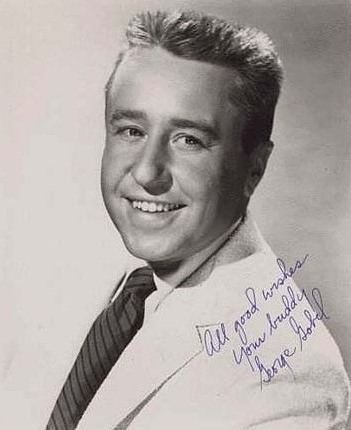
Johnny Carson and George Gobel recognize Knob Noster.
On a September evening in 1972 when Johnny Carson, the king of late-night TV on The Tonight Show, catapulted the little town of Knob Noster into the national spotlight. Here’s how it went down.
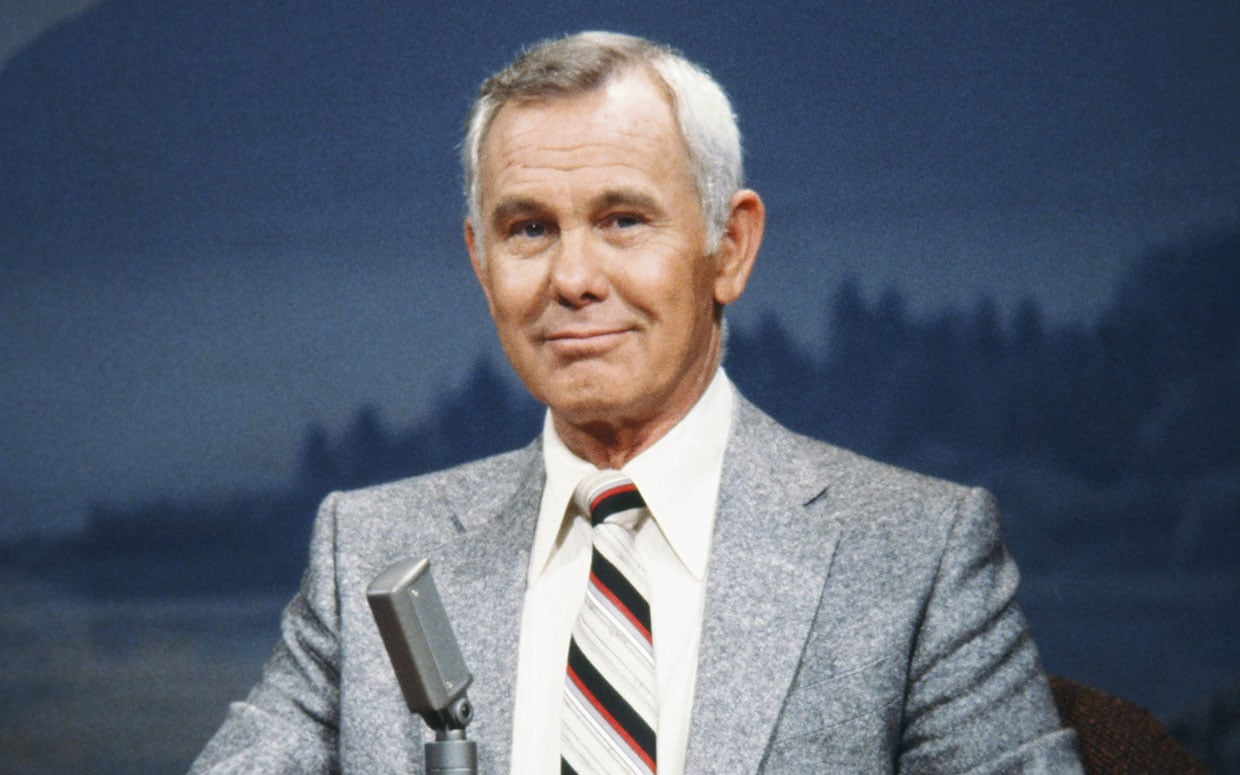
Johnny was chatting with comedian George Gobel, also known as “Lonesome George,” a guy who loved putting Johnny in a tight spot. In his usual playful way, George teased Johnny about his less-than-stellar memory, hinting at some infamous episodes from Johnny’s past. George smirked and asked, “I suppose you remember the spectacle you made of yourself in Knob Noster, Missouri?”
Johnny shot back, “Knob Noster? That sounds like something you’d ask for in a massage parlor!”
From there, the two dove into a hilarious, impromptu riff on the quirkiness of “Knob Noster” as a name and place, eventually brushing it off as just another of Lonesome George’s tall tales.
But not everyone was ready to let it drop. A few nights later, Knob Noster made its grand return to the national stage! This time, Johnny opened his show with a heartfelt (and somewhat sheepish) apology to the citizens of Knob Noster, Missouri. He spent the first part of his show reading from a plaque sent by none other than Ronald C. Carnes, the president of Knob Noster’s Chamber of Commerce, who took it upon himself to set Johnny straight on the proud merits of Knob Noster.
To top it all off, the plaque came engraved with a new title for Johnny Carson himself: “Johnny Carson, Member of the Knob Noster Chamber of Commerce.”
THE JOHNSON COUNTY CASES. The little town of Knob Noster, near the Eastern line of Johnson county, and on the (prospective) Pacific Railroad, had been, until Price’s army went through it, a flourishing place. It has been robbed by the guerrillas four times since 1862, and when, in the spring of 1863, the last company of Militia left the town, and bushwhacker hordes, belonging to Quantrill’s command, were swarming everywhere around it, the citizens applied to tho military authorities for protection. The military Posts at Warrensburg, Lexington, and Sedalia, were too weak in themselves to be able to detach a portion of their forces for the protection of Knob Noster. The commanders at these posts advised the citizens of Knob Noster to arm and defend themselves. The citizens did so; kept pickets and guards every night, and were in constant communication with the military authorities, by whom they were supplied with ammunition, and, perhaps, even with arms. Several other such independent companies were organized in different parts of tho county for mutual protection; and that the insecurity to life and property demanded such measures will be granted by every one, when learning that the Captain of one of these companies and several of his neighbors were shot dead by bushwhackers whilst plowing corn, which they had to do in company for safety’s sake. Tho company at Knob Noster elected an old, warm hearted, Western farmer, John Maddox, as Captain, Early in the war he had been in the Home Guards, defending Lexington against Price’s rebels, Although illiterate, he is a man of means, and warmly devoted to the Union cause. In August, 1863, a returned soldier was killed in broad daylight, quite near the town of Knob Noster. This occurrence aroused the indignation of the Union men, and part of Capt. Maddox’s company went out scouting after bushwhackers. Several of these pests were killed about that time, occasional scouts being made by small mounted volunteer or State Militia forces, generally guided or accompanied by Maddox’s men. General Schofield’s Order No. 86, of August 25, 1863, seemed to authorize such laudable action, even if self-defense and self-protection should not alone justify it. Humanity demands of every citizen active and earnest co-operation with the military authorities, in putting down these common enemies of mankind. The Commanding General demands of every citizen the full discharge of his duty in this regard. To enable them to protect themselves from violence, and to aid the troops, when necessary, all loyal and peaceable citizens in Missouri will be permitted to bear arms. Notwithstanding all this, John Maddox, with over thirty of his neighbors, were arrested by order of General E. B. Brown, commanding the Central District of Missouri, confined in the prison at Jefferson City, in company with rebels and bushwhackers, and tried by a military commission, appointed by the General mentioned.
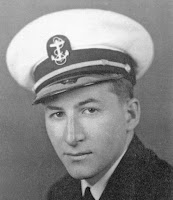
B. Edward “BOB” Carr, Former Mayor of Knob Noster
On Feb. 26, 2017, B. Edward “Bob” Carr, 92, of Knob Noster, passed away at the Missouri Veteran’sHome in Warrensburg. He was born the son of Walter James and Alice Francis (Koch) Carr on May 14, 1924, in Knob Noster, Bob grew up in Knob Noster, graduating from high school in the spring of 1942. He enrolled in the University of Missouri where he participated in ROTC. He later joined the United States Navy in 1943 and was commissioned as a United States naval aviator. As part of his naval aviation preflight training, he spent time at William Jewell College, the University of Kansas and the University of Iowa. He returned to Warrensburg and re-enrolled at Central Missouri State. He played basketball at CMSU for Coach Tom Scott and later Earl Keth. While in preflight training for the Navy, he also played basketball at the University of Kansas for Coach Phog Allen. After leaving the Navy, he returned to Knob Noster to work with his father and became part owner of the Knob Noster Grain Elevator, Knob Noster Locker Plant and began his appliance business, Knob Noster Radio and TV.
Carr, a longtime civil servant, served in a variety of positions in the Knob Noster community including volunteer fireman, followed his father as city clerk of Knob Noster, city alderman and eventually became mayor of the community. He also was member of the Knob Noster Lion’s Club, Chamber of Commerce and Whiteman Air Force Base Community Council. He was recognized for his service to the community and received several awards including Lion of the Year, Chamber of Commerce Outstanding Citizen of the Year and Whiteman Air Force Base Community Council Leader of the Year.
In 1948 he married June Ann Frame in Kansas City. She preceded him in death on Oct. 30, 2001. He married Jean Crosby in Knob Noster, on April 5, 2003. She also preceded him in death. In addition, he was preceded in death by his parents; his brother, Dr. Walter James Carr Jr.; and his sister, Jean Carr Conboy.
He is survived by his four children, Jim Bob Carr of Overland Park, Kan., Julie Ogletree (Buddy) of Nixa, Jane Hughes (Tom) of Knob Noster and John Carr (Brenda) of Oak Grove; three nieces, Cindy Bennett, Kansas City, Cathy Egan (Pat), Kansas City, and Carol Groebe (David), Overland Park, Kan.; seven grandchildren, Cliff Everts, Salena Corbett, Brad Hughes, Brian Hughes, Kristi Carr, Katie Carr and Nick Depasquale; eight great-grandchildren and several great-nieces and nephews.
Funeral services will be held at 2:30 p.m, on Wednesday, March 1, at Sweeney-Phillips & Holdren Funeral Home, with Brother Charles Brant officiating. Interment will follow in Knob Noster Cemetery with full military honors. Pallbearers will be Cliff Everts, Brad Hughes, Brian Hughes, Jay Jordan, Casey Cunningham, Clint Corbett, Frank Webber and Todd Brown. The family will receive friends from 6to 8 p.m, on Tuesday at the funeral home.
Raymond E. Bass

Raymond E. Bass, Former Mayor
of Knob Noster
On Wednesday, Oct. 13, 2016, Raymond Eugene “Ray” Bass, Sr., 89, of Knob Noster, was greeted at Heaven’s gates by his loving parents, Louis “LB” and Geneva Bass, two brothers, Harold and Dean, and one son, Finis. He was surrounded and supported by his loving family and caregivers during the last days of his life.
He was born in Knob Noster on Sept. 5, 1927, the son of Louis B. and Geneva (Calvert) Bass.
In 1946 Raymond joined the U.S. Army where he proudly served for 20 years. He retired as a sergeant first-class. After he retired, he returned to his home of Knob Noster where he owned and operated multiple successful businesses for many years (Bass Trucking Company and Mr. B’s Convenient Store). He spent many years as a public servant in the capacities of city councilman, alderman, mayor pro tem, and mayor.
In August 1966 he married the love of his life, Idella “Del” Dickinson. To this union two of his children, Eric and Tonya, were born. They were married for 50 wonderful years. He was an amazing husband, father and friend who volunteered his time to “many” sports teams as a wonderful coach and mentor.
Raymond leaves many to cherish his wonderful memories: his wife, Idella Bass; three sons, Ray Bass, Jr. (Vicki) of Brown Deer, Wis., Keith Bass of Higginsville and Eric Bass (Christi) of San Antonio, Texas; two daughters, Melanie Carr (Deoral) of Enid, Okla., and Tonya Gresham (Bryant) of Kansas City; four sisters: Juanita Benton of Higginsville, Betty Benton (Travis) of Higginsville, Mary Steward of Knob Noster, Janet “Sue” Winters (Elbert) of Knob Noster; three brothers, Joseph Bass, Lawerence “Sonny” Bass (Dorothy) both of Warrensburg, Wayne Bass (Marie) of Odessa; 11 grandchildren; 11 great-grandchildren; and a host of nieces, nephews, other relatives and friends.
Sidney Neal Davis, 89, died Monday, March 20, 2017, in Mesa, Arizona,
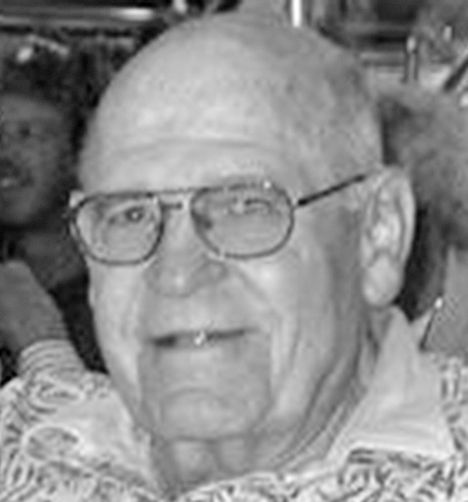
of pulmonary fibrosis.
The only son of Perry L. and Helen W. (Wimer) Davis, Sidney, was born April 25, 1927, in Knob Noster. He graduated Knob Noster High School in the class of 1945. Sidney attended Central Missouri State Teachers College, graduating in May 1950, with a Bachelor of Science in Business Administration with a major in accounting. Sid served twice in the U.S. Navy, from 1945 and 1954. In between, he worked at Arthur Young and Co., Kansas City. Sid was the owner of Knob Noster Oil Co. with Bob Overby and had a second career selling advertising with Appreciated Advertising of Kansas City and Blue Sky Specialties, Warrensburg, owned by his stepdaughter, C. Jeannie Everly, who preceded him in death.
He was a member of Knob Noster VFW Post 4195, Knob Noster First Christian Church, and active in the Johnson County Missouri Democratic Party. Until the time of his death, Worshipful Brother Sidney N. Davis was the oldest living Past Master of Knob Noster Lodge No. 245, Knob Noster, having served in that capacity in 1960 and 1964. He first joined the Lodge on Jan. 3, 1949, and received his 50-Year membership pin on Jan. 3, 1999. Sid loved the Lodge. Sid married I. Ruth (DeJarnette) Rimel on Nov. 2, 1974. She survives at the home. He is also survived by stepdaughters Linda K. Gregory and James W. Spitz of Mesa, Arizona, and Tammie S. Clippert of Sedalia; a stepson, Michael D. Rimel and Kim of Sedalia, and son-in-law, Robert A. Everly of Warrensburg; grandchildren, James J. Gregory of Eldon, Ryan M. Rimel of Odessa, Robert A. Everly II and Cassandra Whitaker, Chelsea L Orman and Brandon of Warrensburg, and McKenna E. Clippert of Sedalia; and many great-grandchildren.
 Johnson County (MO) Historical Society


You must be logged in to post a comment.