THE MT. OLIVE
SETTLEMENT
EST. 1865
Emancipated Slave Town Formed, NAMED MT. OLIVE FROM THE BIBLE
LOCATED ABOUT 12 Miles NE of Warrensburg in the Simpson Township
 Northeast of Warrensburg, MO. |
LATE NINETEENTH
CENTURY
EMERGENCE OF
THE AFRICAN
AMERICAN COMMUNITY
During the transitional period from slavery to freedom, many former slave owners gave tracts of land, usually 20 acres, to their former slaves. Blacks also began to purchase land for themselves, and real estate transfers were a key indicator of changes in social status. Changing conditions led some black families to migrate from one area to another. Others remained on the land that they owned and commuted to work sites in nearby towns. Many moved from rural settlement areas such as Mt. Olive to the Old Town section of Warrensburg, creating a sizable population of African American families.
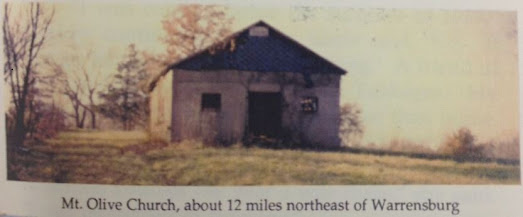
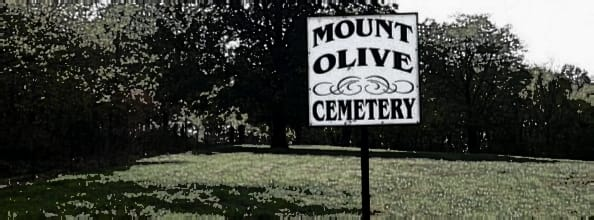
As a whole, the backdrop of the African American in the area was rural, with Old Town in Warrensburg providing a more urban experience. The settlement patterns of African American families in the Warrensburg area have three major focal points. Mt. Olive, located 12 miles northeast of Warrensburg in Simpson Township dates to the end of the Civil War in 1865. Many of the earliest settlers of Mt. Olive were former slaves brought into the area by Sarah Simpson and her son, James, in 1832. The congregation of the Mt. Olive Church, established in 1875, erected a house of worship at the intersection of what later became NE 221 Road and NE 950, which also served as the meeting place of the informal community of African Americans. The village eventually grew to include the Mt. Olive Cemetery, which opened in 1900; Foster School and, later, East Lynn School; a series of general stores, garages and welding shops; a horse training and racetrack; a bandstand pavilion; and approximately 20 homes. The community was self-sustaining, practicing shared work and projects. By the 1950s, the nature of farming, and new opportunities for work for blacks opened up in nearby towns, prompting members of this community to find jobs elsewhere. As the rural population declined, the church became inactive and, with the integration of county schools in the late 1950s. Other towns in the surrounding area with sizable African American populations were Centerview, Warrensburg, Montserrat, Mayview, Holden and Knob Noster.
Mt. Olive, which got its name from the bible, was a settlement that was started by James Simpson in 1832. The settlement was located 12 miles northeast of Warrensburg, Missouri, on the Flagstaff Creek and Blackwater River. Most of the settlers in Mt. Olive were former slaves. There were 20 to 30 black families living in the settlement. It started at the end of the Civil War.
James Simpson came to Missouri from Virginia. He brought his widowed mother, 101 slaves, and other families. He owned 680 acres of land and was a farmer. His first settlement was the Simpson Township, which grew into Mt. Olive. Members of the Simpson Township included: Joseph Albin, John Bowman, Dr. Z Case, Alexander Greer, Jerome Greer, William Greer, Wm. Lazenby, Robert Maxwell, Jacob Neff, Wm. Pollock, all of their families, and many more.
In the community of Mt. Olive there were 10-12 black-owned farms. The residents were quiet, hardworking and resourceful. In Mt. Olive the blacks outnumbered the whites. In their farms, they had chickens, ducks, geese and turkeys. They butchered hogs each winter, had a garden, and made milk and butter.
Mt. Olive had a Methodist church built in 1875. When the church was full going there were 30 members. The church served not only as a religious gathering but also as a fellowship for friends to get together. It was a big part of the town. The church held annual Christmas programs and served all denominations. Services were held in the afternoon because the pastor gave services in Warrensburg in the morning. The second church was built in 1914 and the third in 1955.

By Lucille D: Gress, An informal History of Black Families
WITH PERMISSION
OUR FAMILYS DONE LEFT
THEY HAD EAGER ADVENTUROUS EYES.
BEHIND THEM THEY LEFT A FOUNDATION
AND A PEACEFUL CEMETERY WHERE THEY LIE.
BY: FAE SIMMONS. c FOR THE FAMILYS OF MT. OLIVE
c/o THE JOHNSON COUNTY HISTORICAL SOCIETY
 Johnson County (MO) Historical Society
You must be logged in to post a comment.