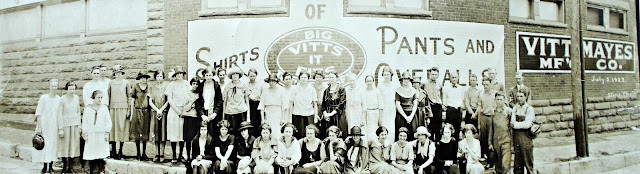
The history of Warrensburg’s uniform manufacturing industry stretches back to 1914, when Henry E. Vitt, A. S. Mayes, and Frank Mayes organized a new manufacturing company. The business was originally located above McMeekin Mercantile, where the company began what would become a long and important history in Warrensburg.
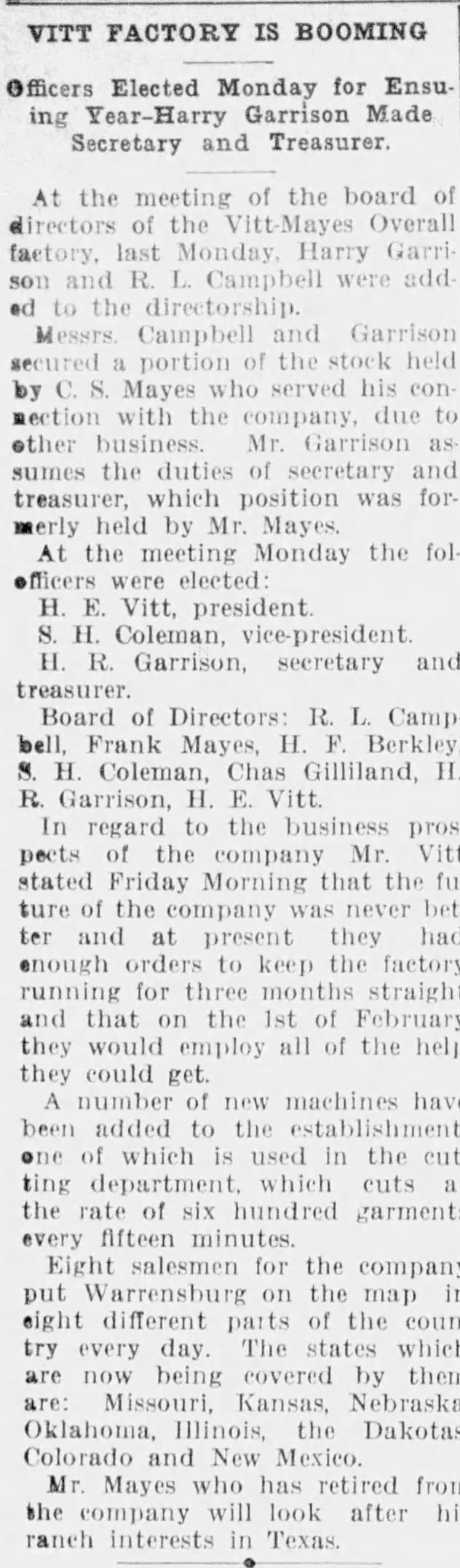
By 1917, the company was known as the Vitt-Mayes-Garrison Company. Harry R. Garrison served as secretary, while Henry E. Vitt was general manager. The business continued to grow, and by 1918 its name had been shortened to the Vitt-Mayes Company, with Garrison continuing as secretary.
The company quickly became an important part of Warrensburg’s economy. In 1919, Vitt-Mayes was reported to be the largest employer in Warrensburg. The company not only provided jobs but also took an interest in the welfare of its employees. A cafeteria was added for the workers, giving employees a place to eat during their workday. In 1922, the company went a step further by providing $1,000 worth of life insurance for its employees at a cost of only one penny per day.
A major change came in 1923 when Henry E. Vitt died. Following his death, the board of directors elected Harry R. Garrison as secretary and general manager, replacing Vitt in the company’s leadership. Under Garrison’s direction, the company continued to expand its market. Its products were being shipped throughout Missouri and into Illinois, Kansas, Iowa, Oklahoma, Colorado, Nebraska, and Utah.
In February 1924, Eliza Vitt, the widow of Henry E. Vitt, sold her interest in the Vitt-Mayes Manufacturing Company to the other stockholders. This marked another important step in the company’s transition following Henry Vitt’s death.
The Beginnings of Unitog
The story of Vitt-Mayes-Garrison eventually became connected to another important Warrensburg business: Unitog. In 1929, A. D. Brookfield founded the Unitog Manufacturing Company with a filing cabinet and $3,500 in borrowed money. Brookfield had extensive experience in the clothing industry, having previously served as vice president of Cowden Manufacturing Company, a large industrial clothing manufacturer.
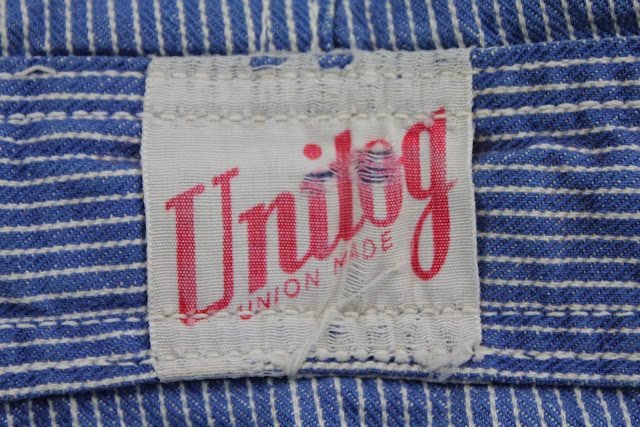
Brookfield’s new company began as a mail-order business specializing in one-piece coveralls. The name “Unitog” reflected Brookfield’s background as a former Latin teacher, combining unus, meaning “one,” with the Greek word toga, meaning a garment.
During its early years, Unitog operated on a very small scale. Brookfield could carry the company’s entire inventory in the trunk of his car, while cutting and sewing were contracted to garment factories in Kansas City. The original product line consisted of a one-piece coverall, a grease coat for service-station attendants, and a cap.
The Great Depression made those early years difficult. At one point, Unitog had only four employees. Nevertheless, Brookfield continued to build the business, using mail-order sales and requiring customers to prepay their orders. By the late 1930s, annual sales had reached approximately $500,000, and the company had expanded its products beyond coveralls.
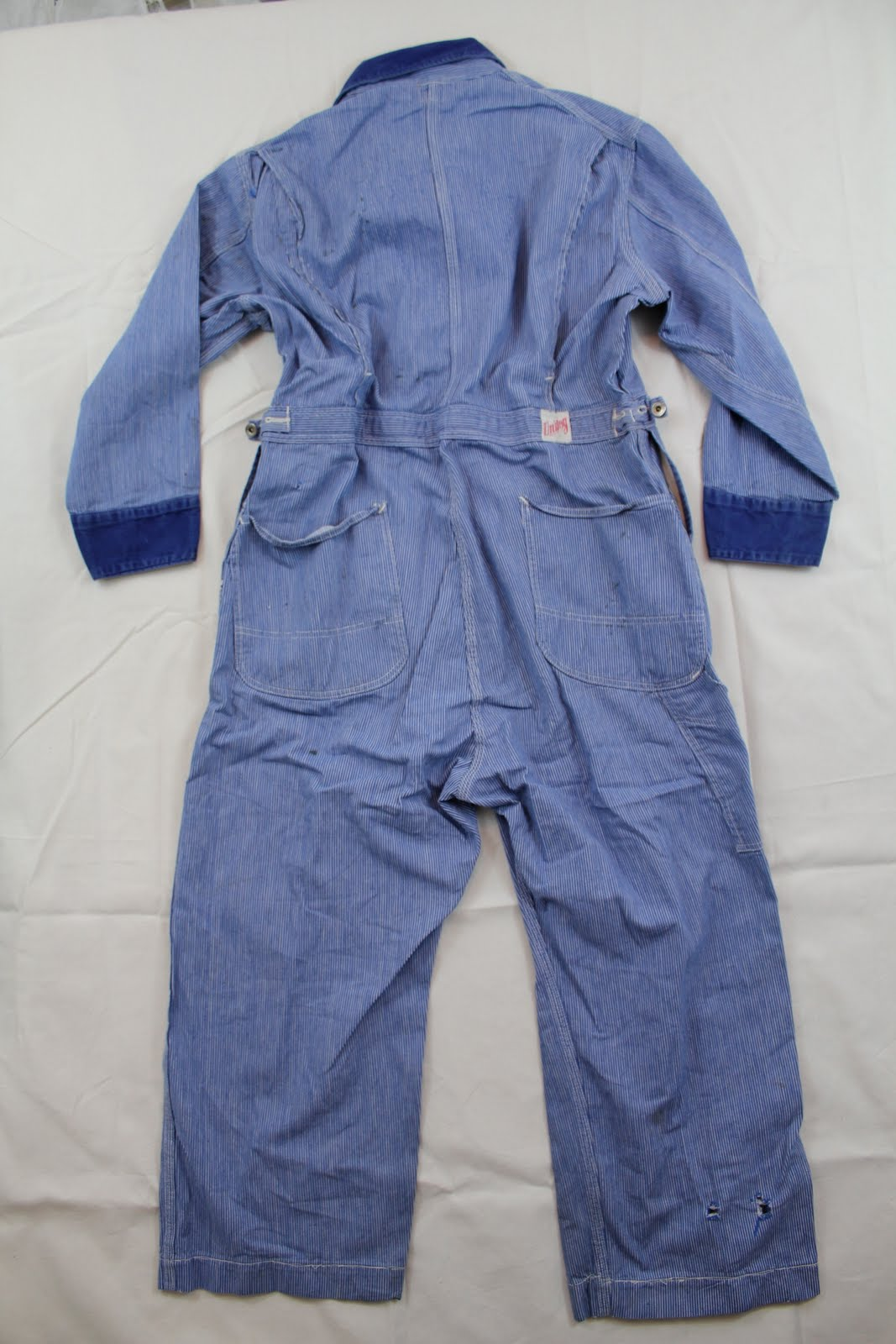
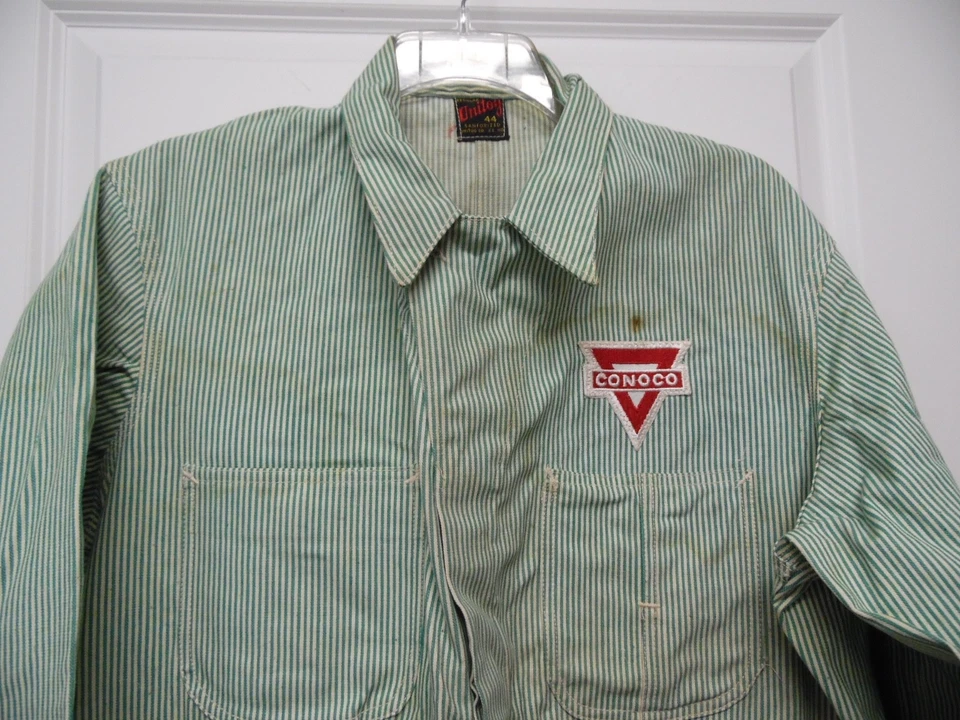
In 1938 and 1939, Unitog gained several important automobile-dealer accounts, supplying shop coats, white shirts, and work pants for service-department employees. One of the company’s most important early customers was the Continental Oil Company, better known as Conoco. The Conoco account became a cornerstone of Unitog’s business.
1941: The Vitt-Mayes-Garrison Connection
The next major chapter began in 1941. During its first decade, Unitog had primarily been a sales organization that contracted out the actual manufacturing of its garments. A. D. Brookfield wanted to establish a manufacturing partnership, and his search brought him to Harry R. Garrison in Warrensburg.
By then, Garrison was president of the Vitt, Mayes, Garrison Manufacturing Company. His reputation for producing quality clothing made him an ideal partner for Brookfield, whose own business was built around quality products and strong sales.
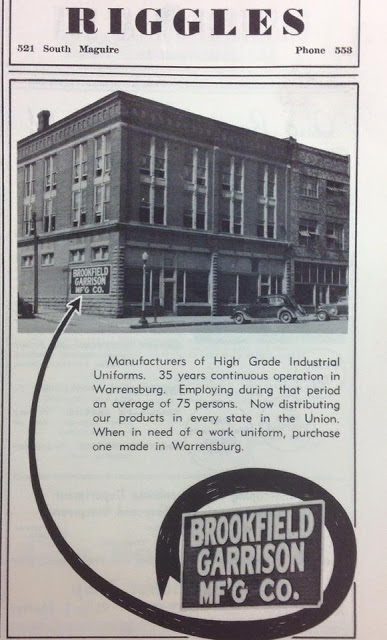
The two men formed a partnership, and in 1941 Brookfield-Garrison Manufacturing Company was incorporated as an equal partnership. Garrison took responsibility for manufacturing, while Brookfield concentrated on sales. The partnership became an important turning point in the history of both Unitog and Warrensburg.
World War II
The timing of the partnership proved especially significant because the United States soon entered World War II. Demand for military clothing increased dramatically, creating new opportunities for Brookfield-Garrison.
Brookfield was involved in textile procurement and industry organizations and worked to secure defense contracts. Brookfield-Garrison received a substantial portion of a $200,000 award shared among several clothing manufacturers. One of its assignments involved producing 20,000 coveralls out of a 62,000-garment contract.
During the war, Brookfield-Garrison manufactured approximately 150,000 fatigue suits and jackets for the defense program. The increased demand eventually led the company to open a second manufacturing facility in Concordia, Missouri.
Even during the war, Unitog continued to maintain its civilian business. That decision proved valuable after the war, when military orders declined sharply and civilian markets once again became increasingly important.
The Postwar Years
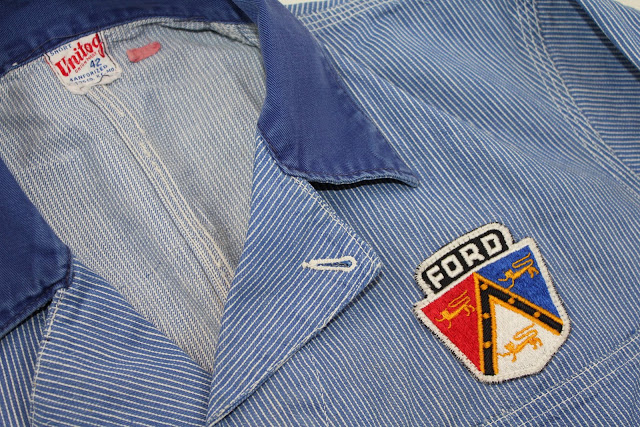
After World War II, Unitog focused heavily on the automobile and oil industries. Conoco remained its largest customer, with approximately $237,600 in orders in 1947. Ford and Chevrolet were also significant customers, placing orders of approximately $114,000 and $93,200, respectively.
During this period, Unitog strengthened its sales organization. Joe Curtis, a retired Conoco employee and longtime friend of Brookfield, joined the company. Known affectionately as “Uncle Joe,” Curtis brought years of experience and valuable connections within the oil industry. He would remain an important part of Unitog’s sales organization for approximately two decades.
Don Lockwood, who had started with Unitog as a sweeper and shipping clerk, had also moved into sales. His memories of the company’s early years illustrated just how far the business had come.
A New Generation
Another important change occurred in 1952 when A. D. Brookfield’s son, Dutton Brookfield, became president of the company. Dutton had joined Unitog in 1939 after graduating from the University of Missouri. After serving in World War II, he returned to the company as a road salesman and steadily advanced through the organization.
By 1947, Dutton had become sales manager, and by 1949 he was vice president. In 1952, A. D. Brookfield became chairman, while Dutton was named president of Unitog and Brookfield Manufacturing.
Harry R. Garrison had retired in 1947. Following his retirement, the manufacturing operation became known as Brookfield Manufacturing Company and was located at 145 W. Pine Street in Warrensburg.
Warrensburg’s Uniform Factories in the 1960s
By the 1960s, Warrensburg had become home to several uniform manufacturing operations connected to this long history.
1960 Warrensburg was home to…
Brookfield Mfg. Co. 145 W. Pine St
Unitog 138 W.Pine St
Utilitog 432 N. Holden St.
1965
Unitog 145 W. Pine Shipping at 138 W. Pine
Unifemme Co, 432 N. Holden
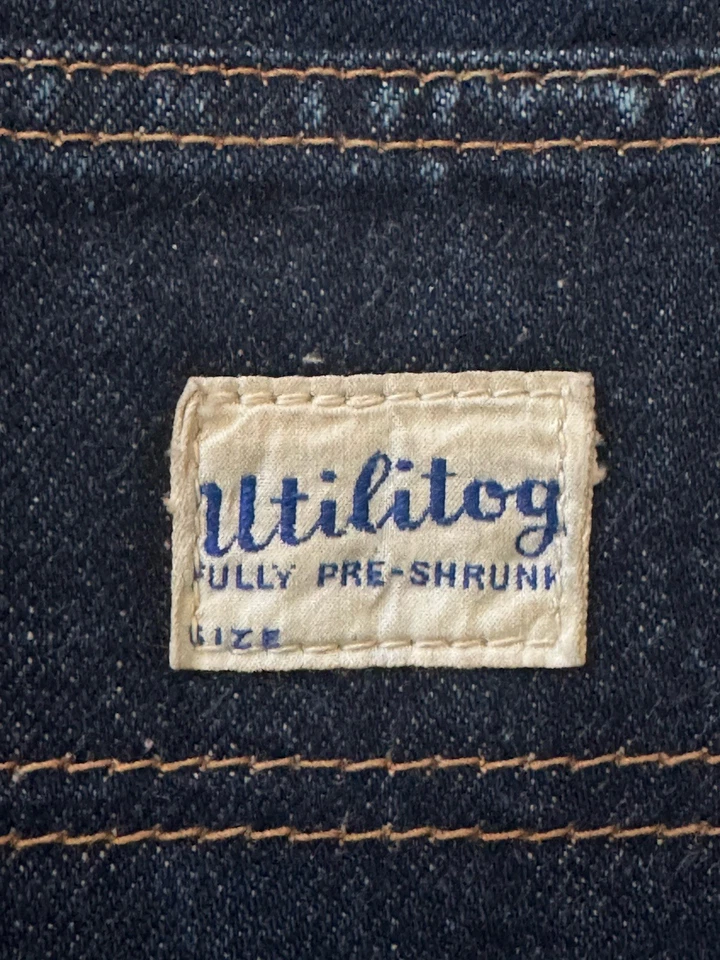
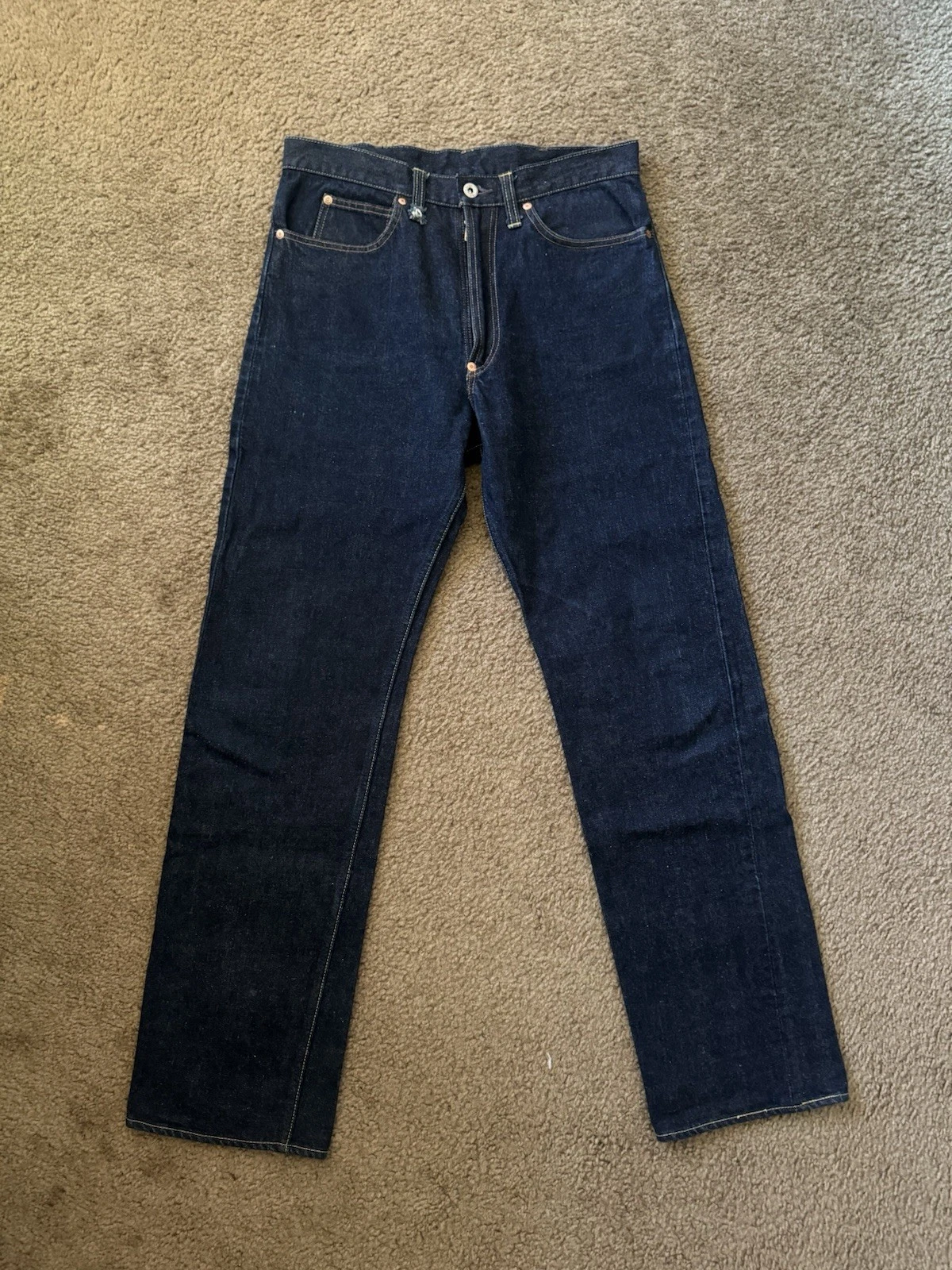
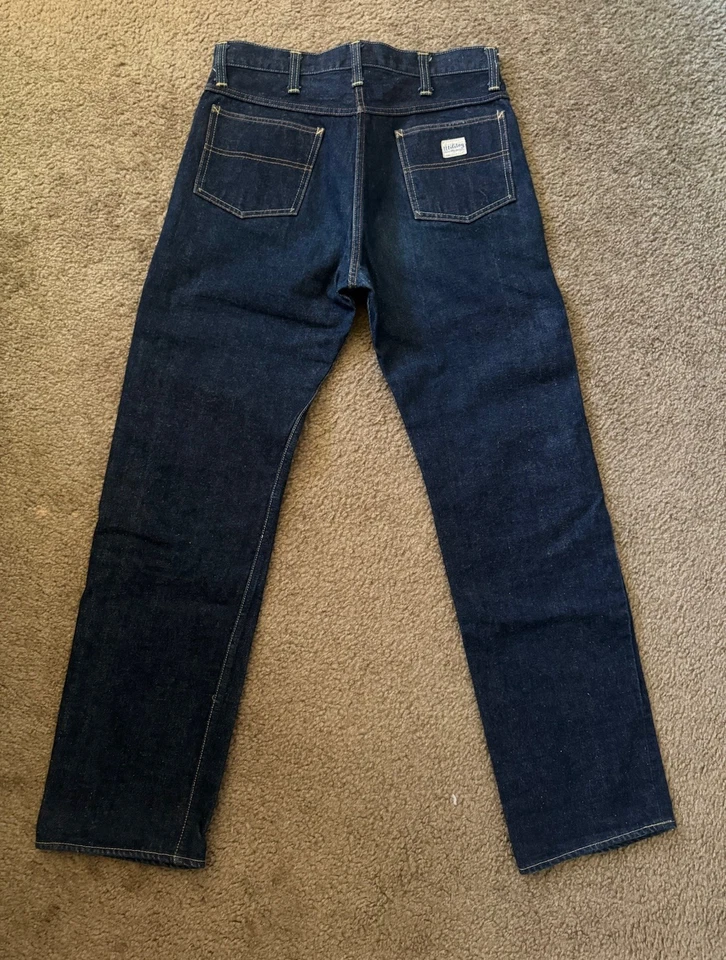
backside of Utilitog Work Pants…aka jeans
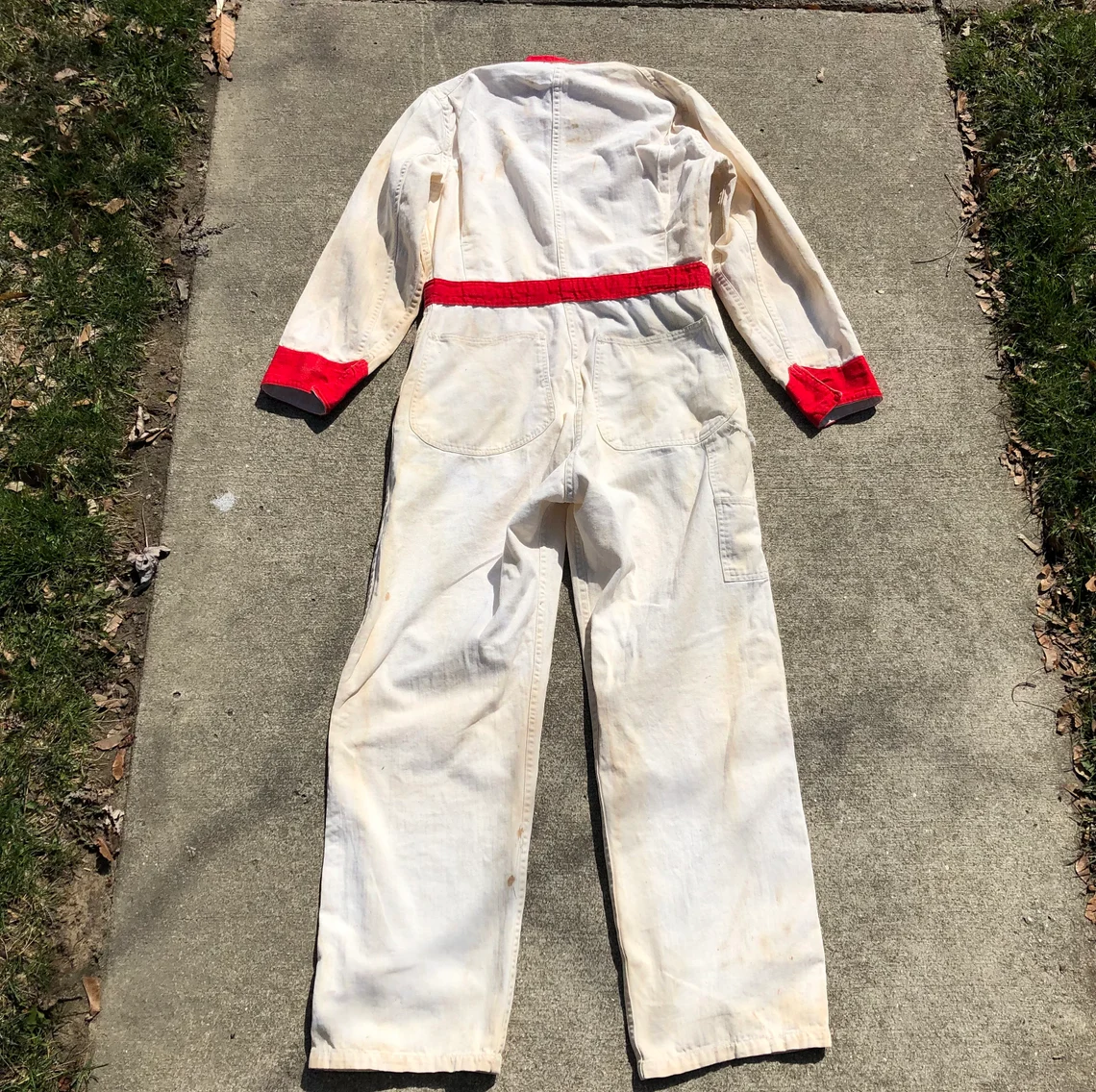
Unitog Work Coverall
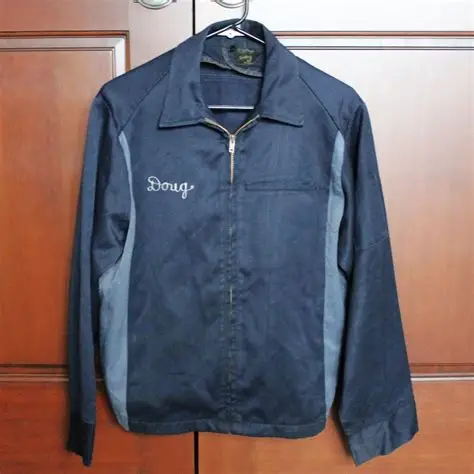
Unitog Work Jacket
In 1960, Brookfield Manufacturing Company was located at 145 W. Pine Street, Unitog shipping operated from 138 W. Pine Street, and Utilitog was located at 432 N. Holden Street.
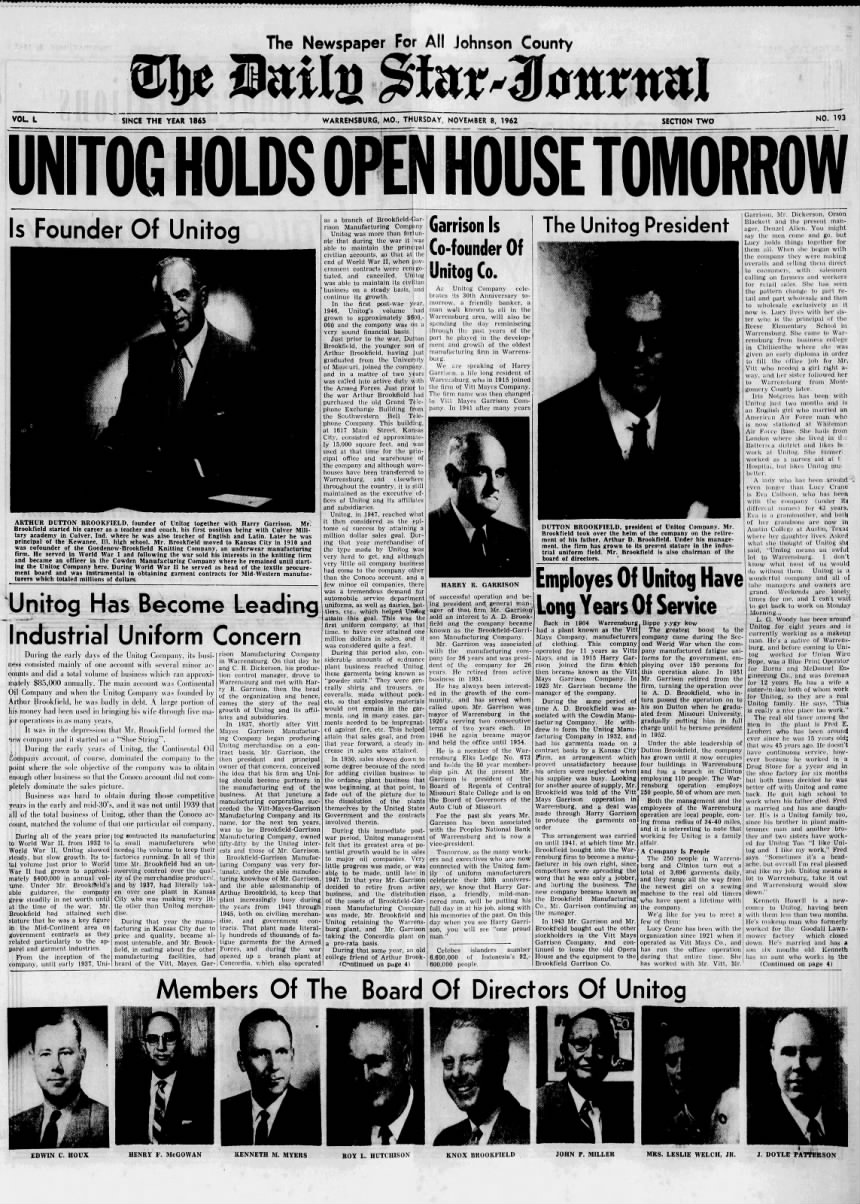
By 1965, the names had changed. Brookfield Manufacturing Company had become Unitog at 145 W. Pine Street, while the Unitog shipping operation remained at 138 W. Pine Street. Utilitog had become Unifemme and continued operating at 432 N. Holden Street.
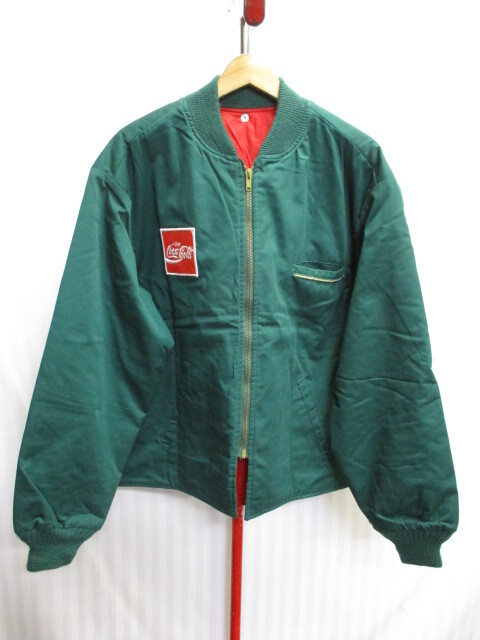
By 1969, Unitog was operating at 145 W. Pine Street, while Unifemme remained at 432 N. Holden Street.
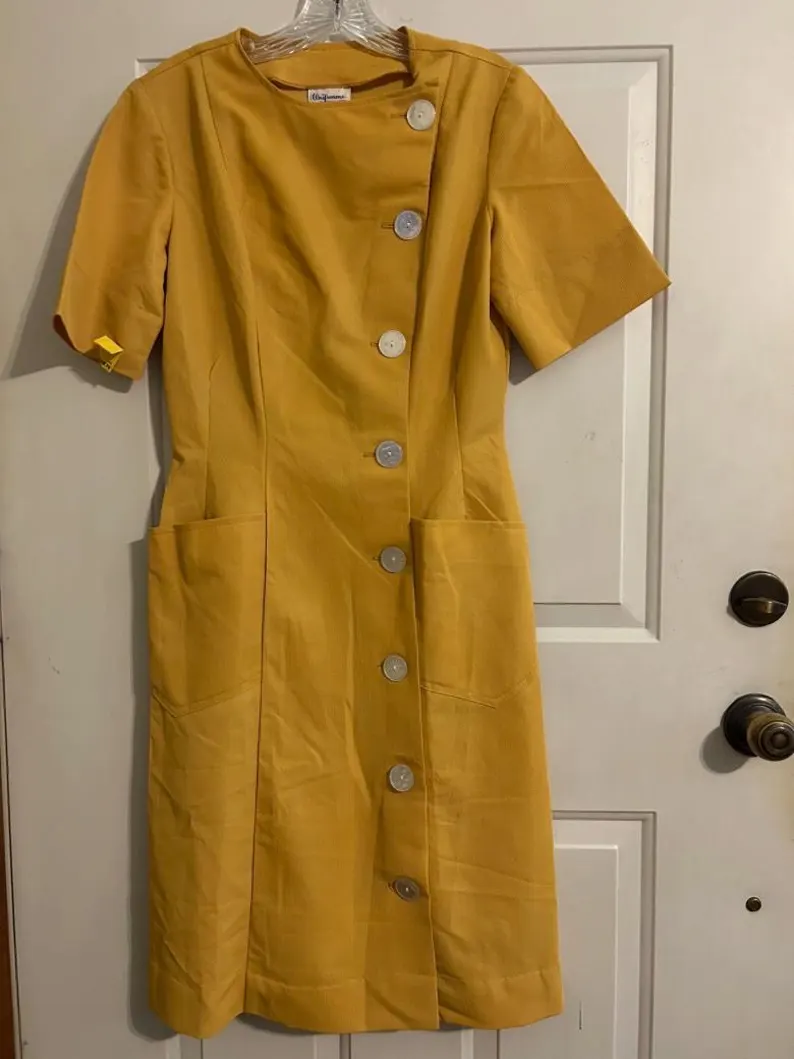
Unifemme diner waitress uniform 1965
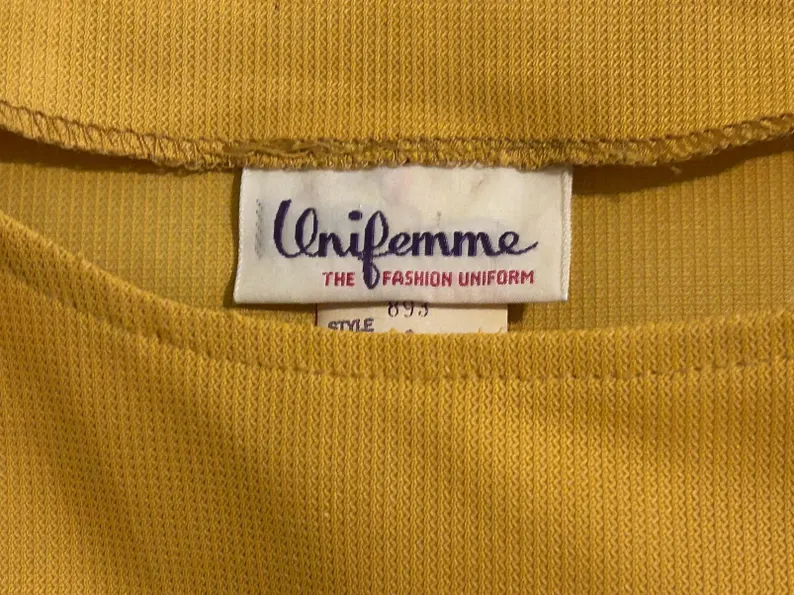
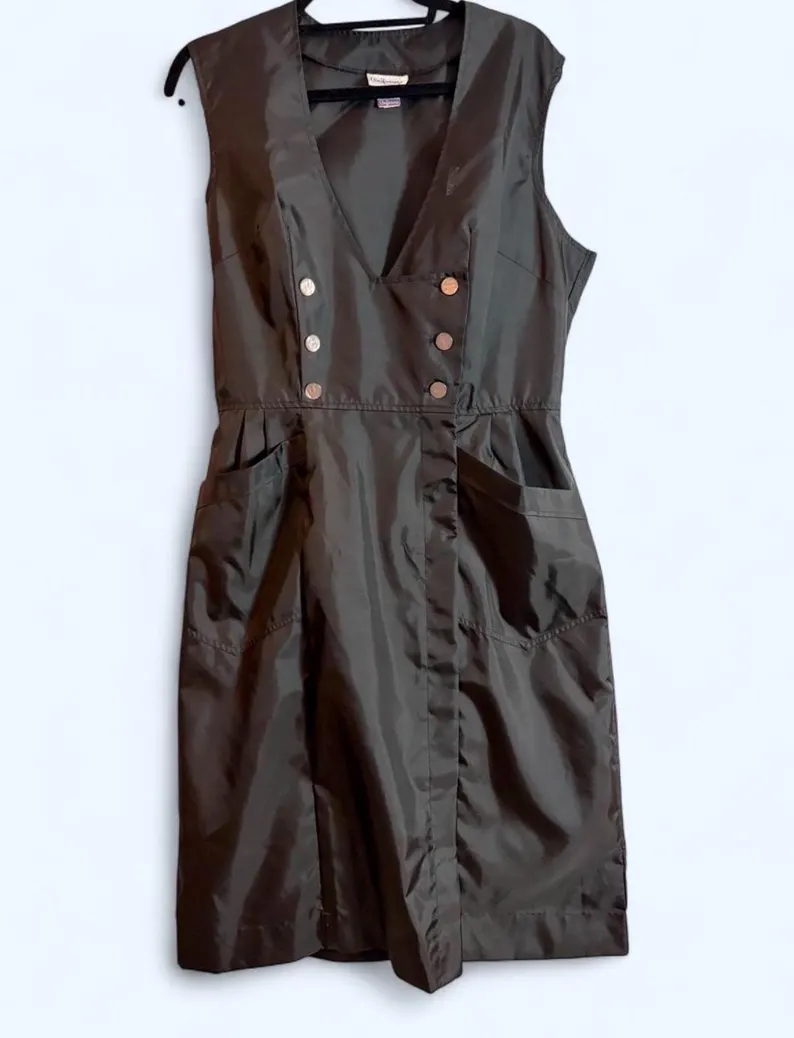
Unifemme work uniform
1960’s Utilitog work jeans
The story of Warrensburg’s uniform industry began long before Unitog became a familiar name. It began in 1914 with Henry E. Vitt, A. S. Mayes, and Frank Mayes and the company they established over McMeekin Mercantile. Harry R. Garrison later became an important part of that story, eventually helping connect the original Vitt-Mayes-Garrison manufacturing operation with A. D. Brookfield and the growing Unitog business.
From the early days of Vitt-Mayes, through the manufacturing demands of World War II, and into the growth of Unitog and its related companies, Warrensburg played an important role in the production of uniforms and industrial clothing.
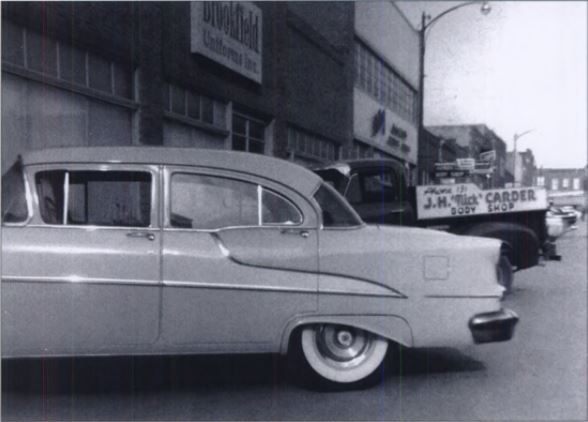
The names and addresses changed over the decades, but the businesses represented something larger: generations of Warrensburg workers who helped establish the community as an important center for uniform manufacturing in Missouri.


You must be logged in to post a comment.